

Can’t carry a tune in a bucket? Terrified at the idea of anyone hearing you sing? Always felt left out watching “natural” singers perform? Here’s the good news: anyone who can speak can learn to sing better. Some people do show more natural musicality than others, but every voice can improve, and so can most ears. True tone deafness is uncommon.
Key takeaways
- True tone deafness is uncommon; most pitch trouble comes from coordination and practice.
- Singing combines several learnable skills: breath, pitch, and rhythm.
- Adults can learn too, though progress may feel slower and clunkier at first.
- Talent is only a starting point; skill, work ethic, and artistry carry you further.
Can anyone learn to sing?
In many ways, singing is sustained speech. The sustained part is one thing that makes it tricky; that’s where breath control and breath support come in. Music also asks for a sense of pitch and rhythm, and it gets several parts of your brain working at once. That’s a lot of multitasking, but each piece is a manageable skill when you break it down.
Some people start singing at step 15, while others start at step 1. That’s OK. With time and attention, you’ll make progress toward your goals. In other words, yes, it’s possible to go from feeling “tone deaf” to being called talented.
Singing myths and facts
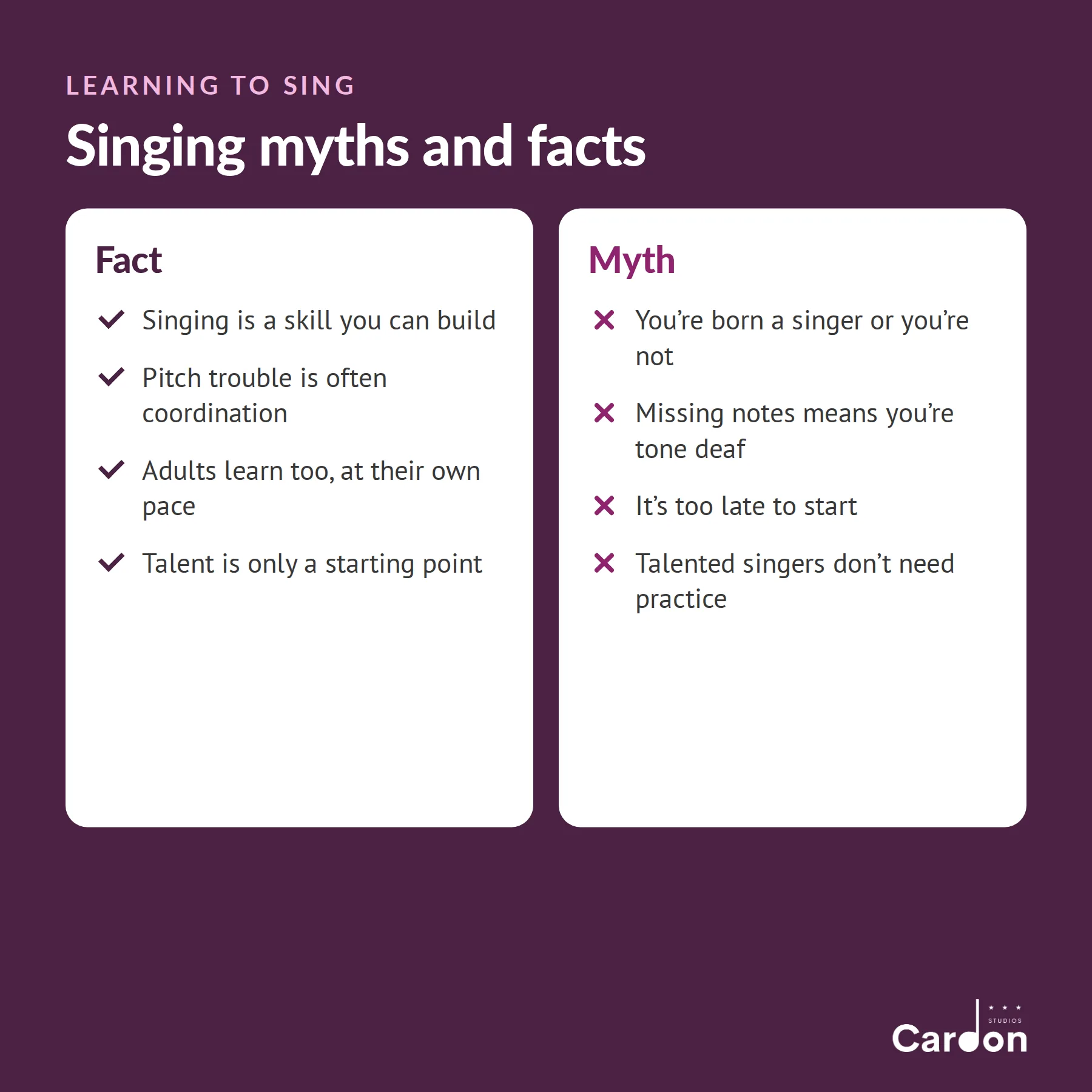
| Myth | Fact |
|---|---|
| You’re born a singer or you’re not. | Singing is a skill you can build. |
| Missing notes means you’re tone deaf. | Pitch trouble is often coordination, not hearing. |
| It’s too late to start. | Adults learn too, at their own pace. |
| Talented singers don’t need practice. | Talent is only a starting point. |
Does age matter?
Age can play a part in music learning. Much like with languages, young children absorb a great deal from the sounds around them, which can make pitch and rhythm come more easily early on. But even if you didn’t grow up with music, you can still learn these skills.
As a teen or adult learner, expect your development to feel slower and clunkier at first. If you’ve ever learned a language as an adult, you know the feeling. For many older learners, that awkward stage, and the embarrassment that comes with it, is what stops them. Don’t give up. The awkward stage passes, and the effort is worth it. Our article on learning to sing as an adult has more encouragement.
Building pitch skills step by step
If singing in tune is your biggest worry, start small and build up.
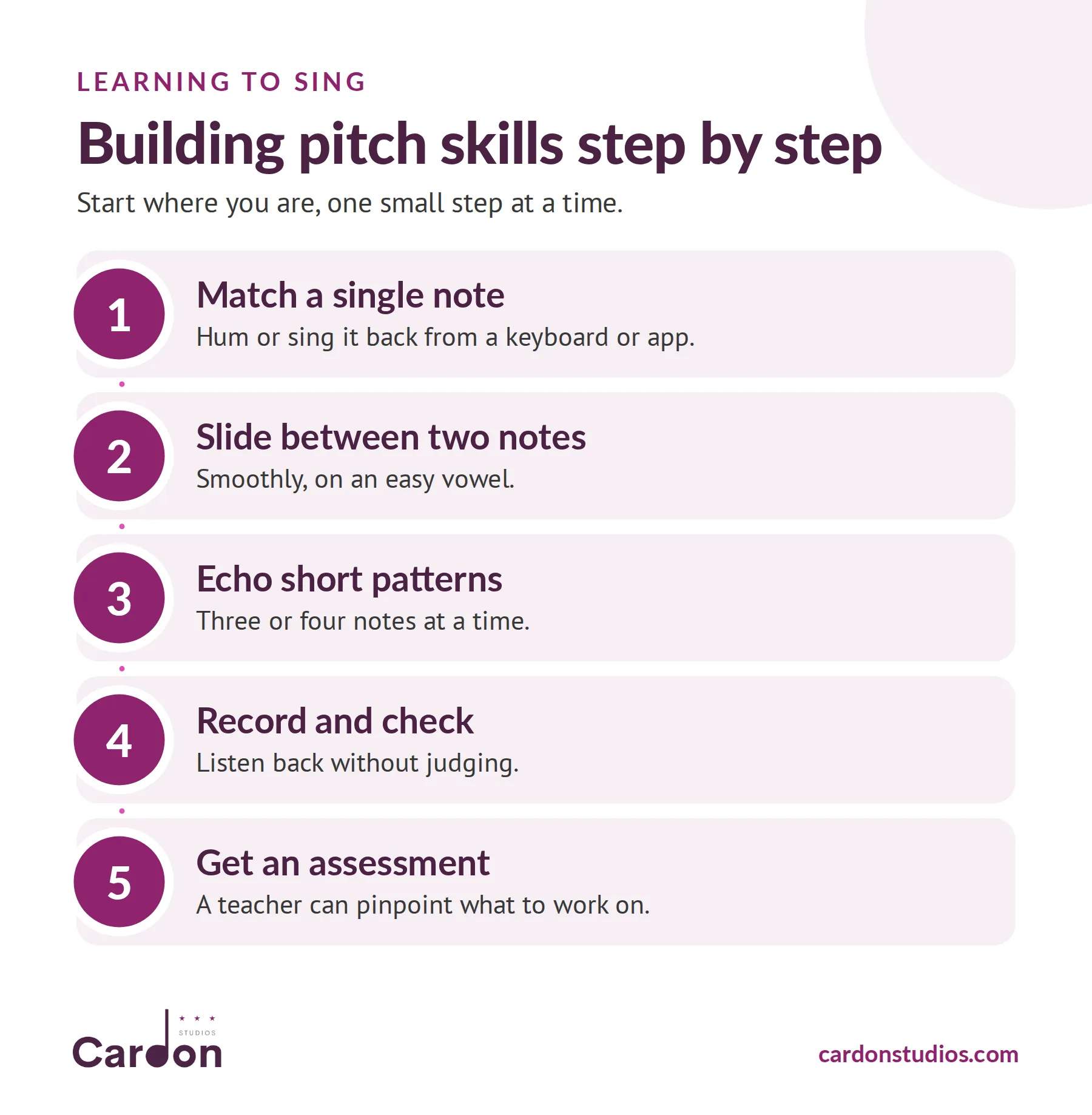
- Match a single note. Play a comfortable note on a keyboard or app, then hum or sing it back.
- Slide between two notes. Glide smoothly from one to the other on an easy vowel.
- Echo short patterns. Sing back three or four notes at a time.
- Record and check. Listen back without judging, and notice where you drift. Our guide to recording yourself shows you how.
- Get an assessment. A teacher can pinpoint what to work on.
An assessment matters more than you might think. A trained teacher who knows voice pedagogy can tell whether a pitch problem comes from a listening disconnect or simply from vocal technique, then help you work smarter rather than harder.
Rhythm counts too
Pitch gets most of the attention, but rhythm is just as learnable. Clap or tap along with songs you love, count beats out loud, and practice speaking lyrics in rhythm before you sing them. Singing along with a steady backing track or a metronome helps you feel the pulse. As with pitch, start simple and build up to trickier patterns.
Be patient with yourself
Learning to sing in front of others can feel exposing, especially if someone once told you that you couldn’t sing. Be kind to yourself. Notice small wins, like a note you matched or a phrase that felt easier, and treat mistakes as information rather than proof of anything. Every confident singer started somewhere.
The talent myth
If you do have natural talent, that’s great, but all it means is that you got your foot in the door. What makes great artists great isn’t talent alone. It’s a blend of talent, know-how, ambition, and their own artistic truth.
“Talent” can even be a dangerous label for an aspiring musician. Calling someone talented can make their journey feel finished when it’s really only beginning, and it can tempt them to rely on luck rather than preparation. You may have heard that luck is when preparation meets opportunity. In the performing arts, that’s very true: if your skills are polished when an opportunity arrives, you just might get lucky.
And if you don’t feel naturally inclined toward music, that doesn’t limit you. Singers who work steadily, think strategically about their practice, and stick with it can raise their skills to a level others will call talent. It’s a label you can claim now or earn as you go.
From the studio
Cardon Studios lessons start wherever you are, from complete beginner to experienced performer. You’re matched with a teacher by your style, goals, age, and schedule, and every lesson is recorded so you can review it as you practice.
Online voice lessons
Find out what your voice can do
One monthly membership includes four private online voice lessons, one video coaching submission, the Learning Library, and member online events, with a teacher matched to your style, goals, age, and schedule.
Common questions about learning to sing
Am I tone deaf if I can’t sing in tune?
Probably not. True tone deafness is uncommon. Most people who struggle with pitch can improve with practice and the right guidance, because the challenge is usually coordination rather than hearing.
Can someone with no musical background learn to sing?
Yes. You may start further back than someone who grew up with music, but breath, pitch, and rhythm are all learnable skills.
Is singing talent something you’re born with?
Some people do start with more natural aptitude, but talent is only the starting point. Skill, practice, and artistry make the biggest difference over time.