

Let’s get one thing straight: singing lessons are for everyone. Anyone can learn to sing better. Not everyone will become a legendary vocalist, but everyone can grow in their own voice and their own style, because singing is a skill, and skills improve with good training and practice. So are singing lessons worth it? For most people who want to sing better, yes. Here’s what lessons actually give you.
Key takeaways
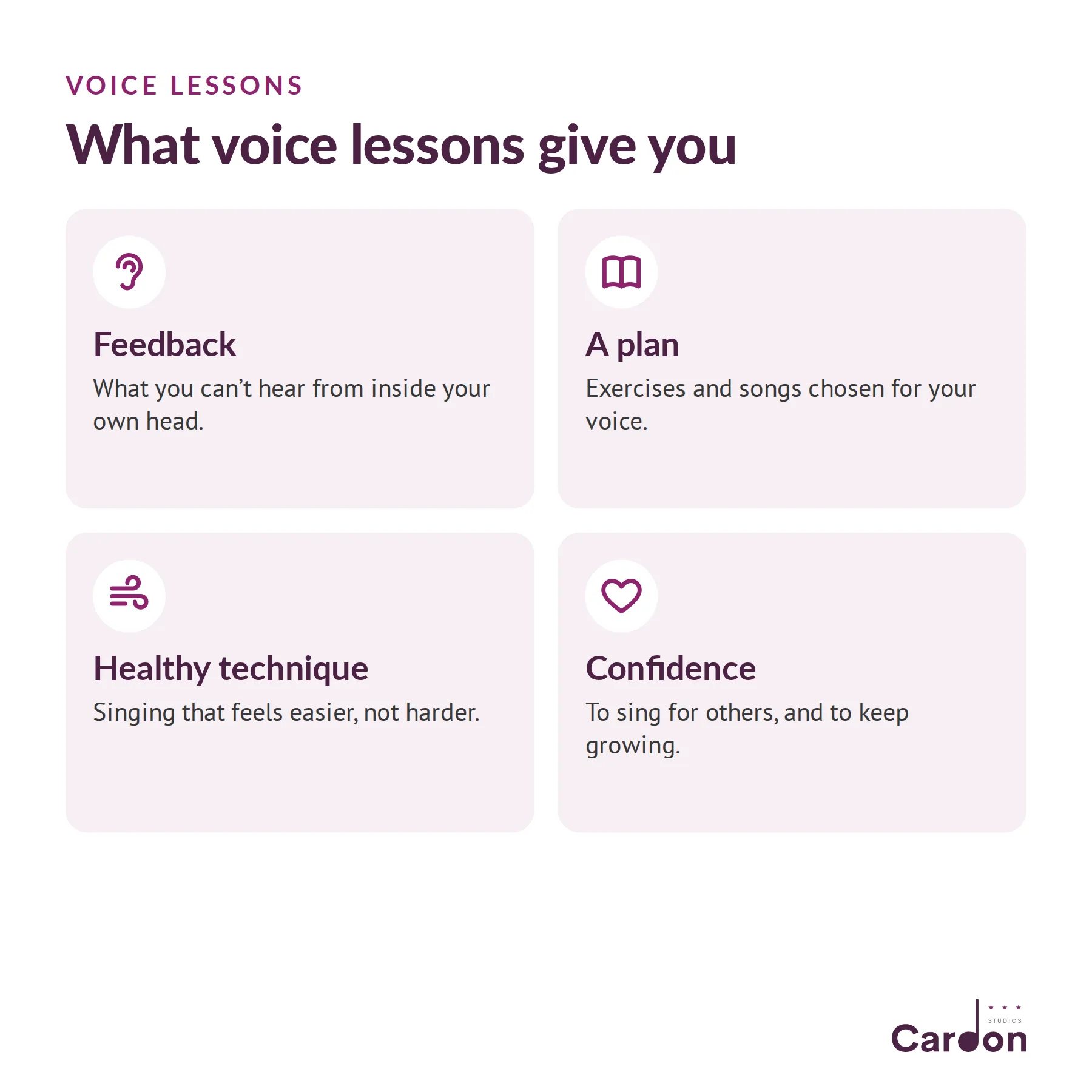
- Lessons give you feedback you can’t get on your own, because you hear yourself from the inside.
- A teacher builds a plan around your voice, your goals, and the music you love.
- Healthy technique makes singing feel easier and more reliable.
- Lessons help beginners and experienced singers alike; even professionals keep training.
Who singing lessons are for
Lessons help singers at every stage: complete beginners who want a clear starting point, adults returning to singing after years away, choir and musical theater singers preparing specific music, and experienced performers polishing auditions or recordings. Whatever your level, the goal is the same: to help you sing the music you love with more freedom, control, and confidence.
Seven benefits of voice lessons
1. Feedback you can’t give yourself
You hear your own voice partly from the inside, so it never sounds to you quite the way it sounds to everyone else. A teacher hears what your listeners hear and can tell you what’s working and what isn’t, in the moment. Our guide to recording yourself explains why that inside view is so misleading.
2. A plan built for your voice
Good lessons aren’t a fixed curriculum. Your teacher listens to where your voice is today, asks about your goals and the music you love, and chooses exercises and songs to match, adjusting as you grow.
3. Healthier, easier technique
Learning to use your voice efficiently, with steady breath and less tension, makes singing feel easier and more reliable. Many singers find that notes and phrases that once felt like a struggle become comfortable with the right coordination.
4. More range and control
Lessons help you understand your voice’s different registers and how to move smoothly between them, so you can use more of your range with more control. Our guides to voice types and vocal range and finding your mix show what that work involves.
5. Confidence to perform
Singing for others gets easier with preparation and practice. Lessons build both, and many studios, including ours, offer friendly places to try your songs in front of an audience.
6. Stronger musicianship
Matching pitch, keeping rhythm, reading your part, and learning songs quickly are all skills a teacher can help you build alongside your technique.
7. Structure and steady progress
A regular lesson gives your practice a purpose and a deadline. You leave each lesson knowing what to work on, which makes it far easier to keep going.
Lessons vs. learning on your own
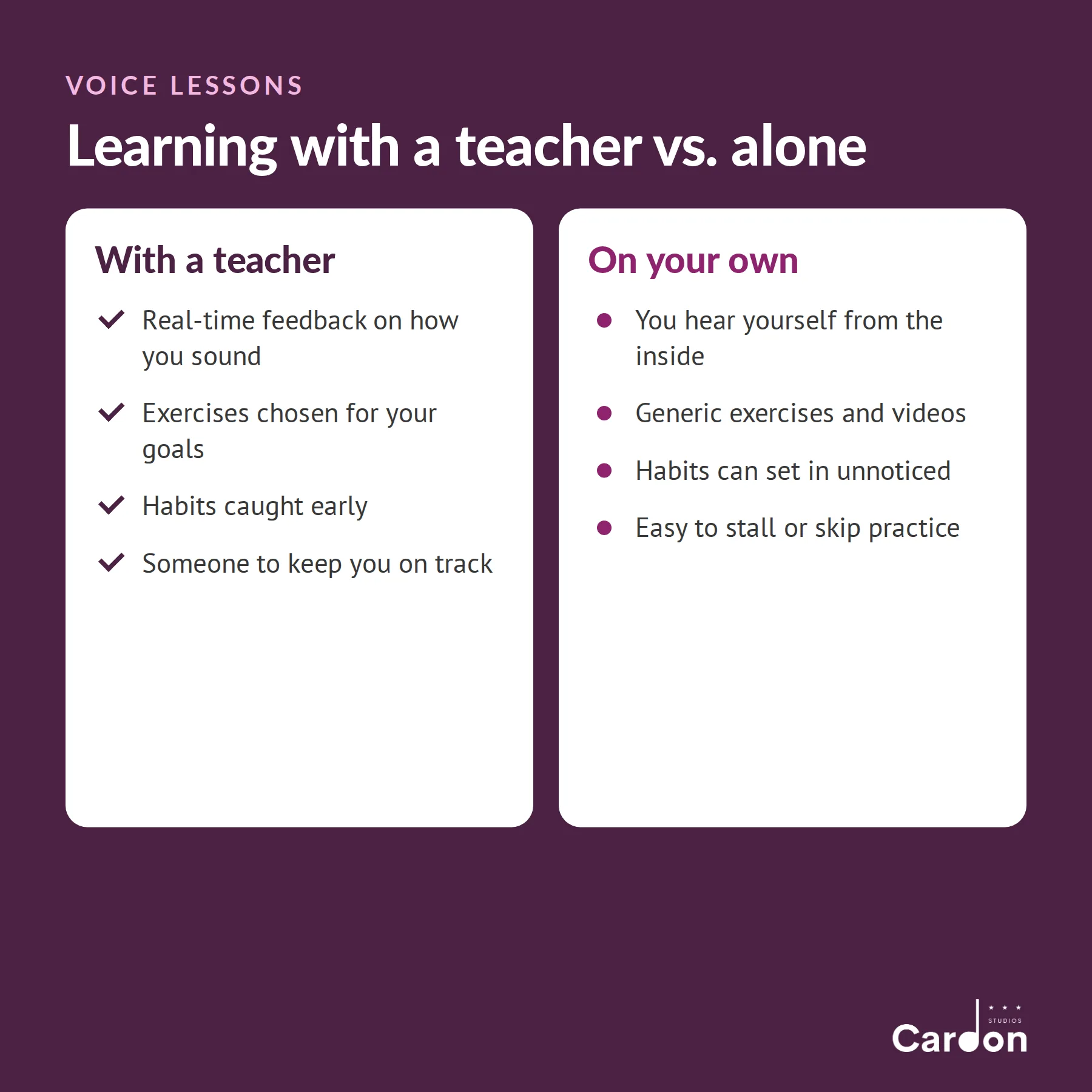
Online videos and apps can be useful, and plenty of singers start there. The big thing they can’t provide is feedback on your own voice.
| With a teacher | On your own |
|---|---|
| Real-time feedback on how you sound | You hear yourself from the inside |
| Exercises chosen for your goals | Generic exercises and videos |
| Habits caught early | Habits can set in unnoticed |
| Someone to keep you on track | Easy to stall or skip practice |
Why professionals keep training
Professional dancers still stretch, drill, and take class every day to keep their skills sharp and learn new ones. Singers are the same. Many professional singers keep working with a teacher to refine their warmups, build new skills, and keep their voices in shape for the demands of performing.
Signs you’re ready for lessons
- You want to sing a specific song, part, or style really well.
- You feel strain, tightness, or fatigue when you sing.
- You have an audition, performance, or recording coming up.
- You’ve hit a plateau practicing on your own.
What to expect when you start
Your first lesson is about getting to know your voice. Your teacher will ask about your goals and the music you love, listen to you sing, and try a few simple exercises. From there, most lessons follow a familiar shape: a check-in, targeted exercises, song work, and a clear plan for practice. Our guide to what to expect from voice lessons walks through it in detail.
Progress comes from what you do between lessons as much as in them. Short, regular practice sessions make new habits stick, and recording yourself helps you notice changes you might otherwise miss. Most singers find that small wins arrive first, like a phrase that feels easier or a note that settles, with bigger changes building over months.
Finding the right teacher
Lessons are only as good as the fit between you and your teacher. Look for experience in your style, clear explanations, and someone you enjoy working with. Our guide to choosing a voice teacher covers what to look for and the questions to ask.
From the studio
At Cardon Studios, singers ages 10 and up are matched with a teacher by style, goals, age, and schedule. Lessons are live and one-on-one online, every lesson is recorded for your review, and you can send a video between lessons for a personalized response within 72 hours.
Online voice lessons
See what lessons can do for your voice
One monthly membership includes four private online voice lessons, one video coaching submission, the Learning Library, and member online events, with a teacher matched to your style, goals, age, and schedule.
Common questions about singing lessons
Are singing lessons worth it for beginners?
Yes. Beginners often benefit the most, because a teacher helps you build good habits from the start instead of undoing old ones later.
How long does it take to see progress?
It varies from singer to singer and depends a lot on regular practice between lessons. Many singers notice small changes early, like a phrase that feels easier, with bigger changes building over months.
Can adults take singing lessons?
Absolutely. Adults bring motivation and focus that make them strong learners. Read why it’s never too late to learn to sing.