


To take care of your voice as a singer, follow the NIDCD’s core habits: drink plenty of water, take vocal naps through the day, and get enough rest. Avoid smoke and vocal extremes such as screaming or whispering, and don’t sing when your voice is hoarse or tired. If you think you have a voice problem, see a doctor.
As a singer, caring for your voice is a full-time job. Your voice is influenced by your whole body and your environment, so good vocal habits reach well beyond the practice room. Intentional vocal care helps you sing well on short notice and keep your voice healthy for the long term, since voices change with age too. This article shares general habits that many singers find helpful; it isn’t medical advice.
Key takeaways
- Hydrate steadily, warm up and cool down, and save your speaking voice on heavy singing days.
- Avoid shouting, smoke, and vaping.
- When you’re unwell, keep singing short and light, or rest.
- See a doctor if hoarseness, pain, or voice changes don’t improve with rest.
Vocal health tips: everyday habits for singers
Most vocal care is a handful of small habits repeated every day.
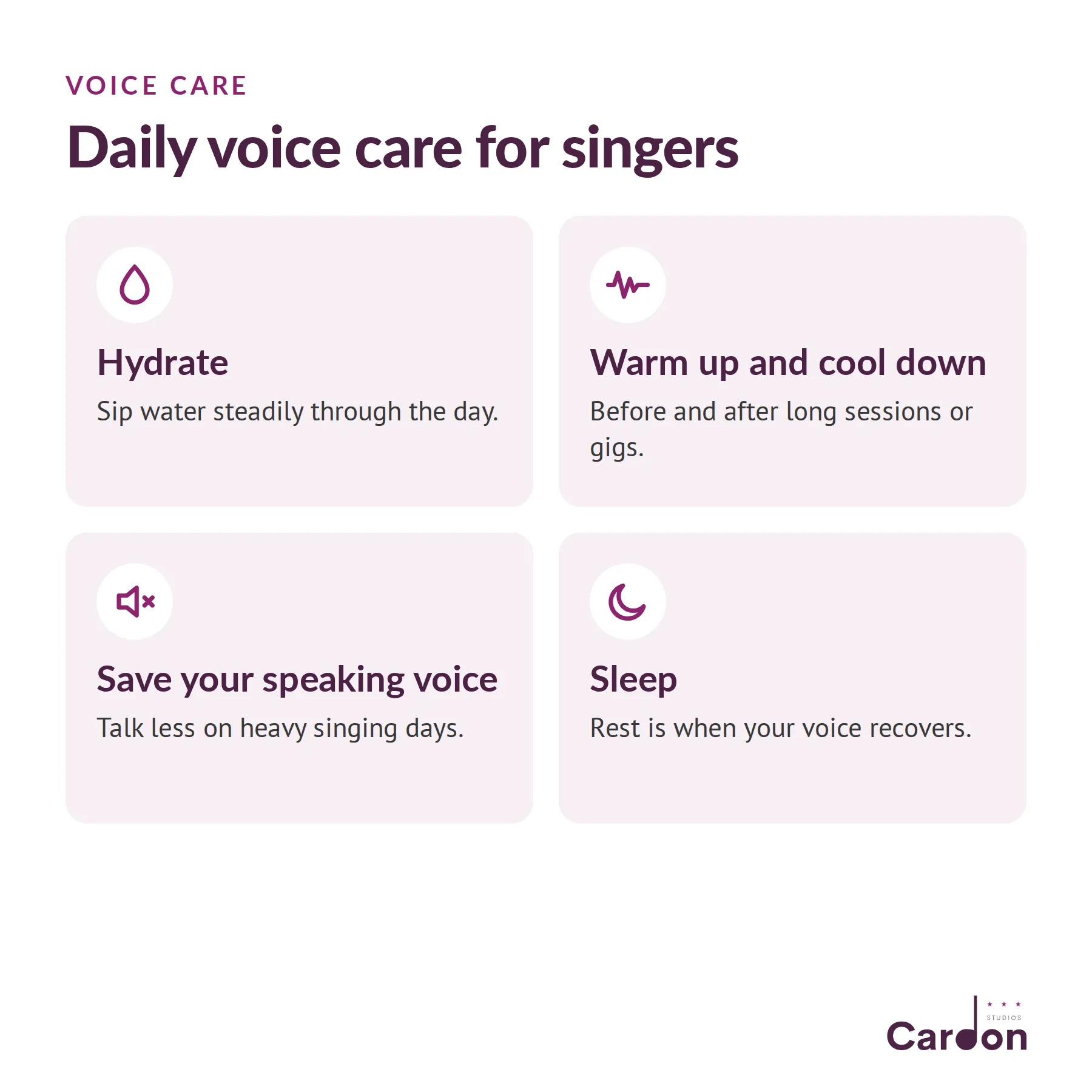
- Use your voice wisely. Avoid shouting and yelling, and reinforce good habits with a regular practice routine.
- Warm up and cool down before and after gigs or long practice sessions. Our guide to warming up explains why it matters.
- Remember that talking is vocal work too. On days with a heavy singing load, limit long conversations and loud socializing.
- Avoid smoky or heavily polluted air where you can.
- Don’t smoke or vape. Smoke of any kind is hard on your throat and your voice.
Hydration and steam
Your vocal folds come together hundreds of times per second when you sing, so it helps to keep your whole body well hydrated. Sip water steadily through the day rather than drinking a lot at once. Plain water is best, although other drinks count too.
Steam can feel soothing. Singing in a hot shower is a great habit, and some singers use a personal steamer on days their voice feels dry.
Rest and sleep
Sleep is when your voice recovers from a day’s use. If you have late-night gigs, keep your sleep routine as consistent as you can, and don’t hesitate to take a nap before a late performance. When you’re short on sleep, vocal rest helps too, and quiet routines like deep breathing, meditation, stretching, or yoga can help you recharge.
When you’re under the weather
Colds and congestion can leave your voice more fragile than it feels, even without a sore throat. If you must sing while you’re unwell, and we mean really must, keep it gentle.
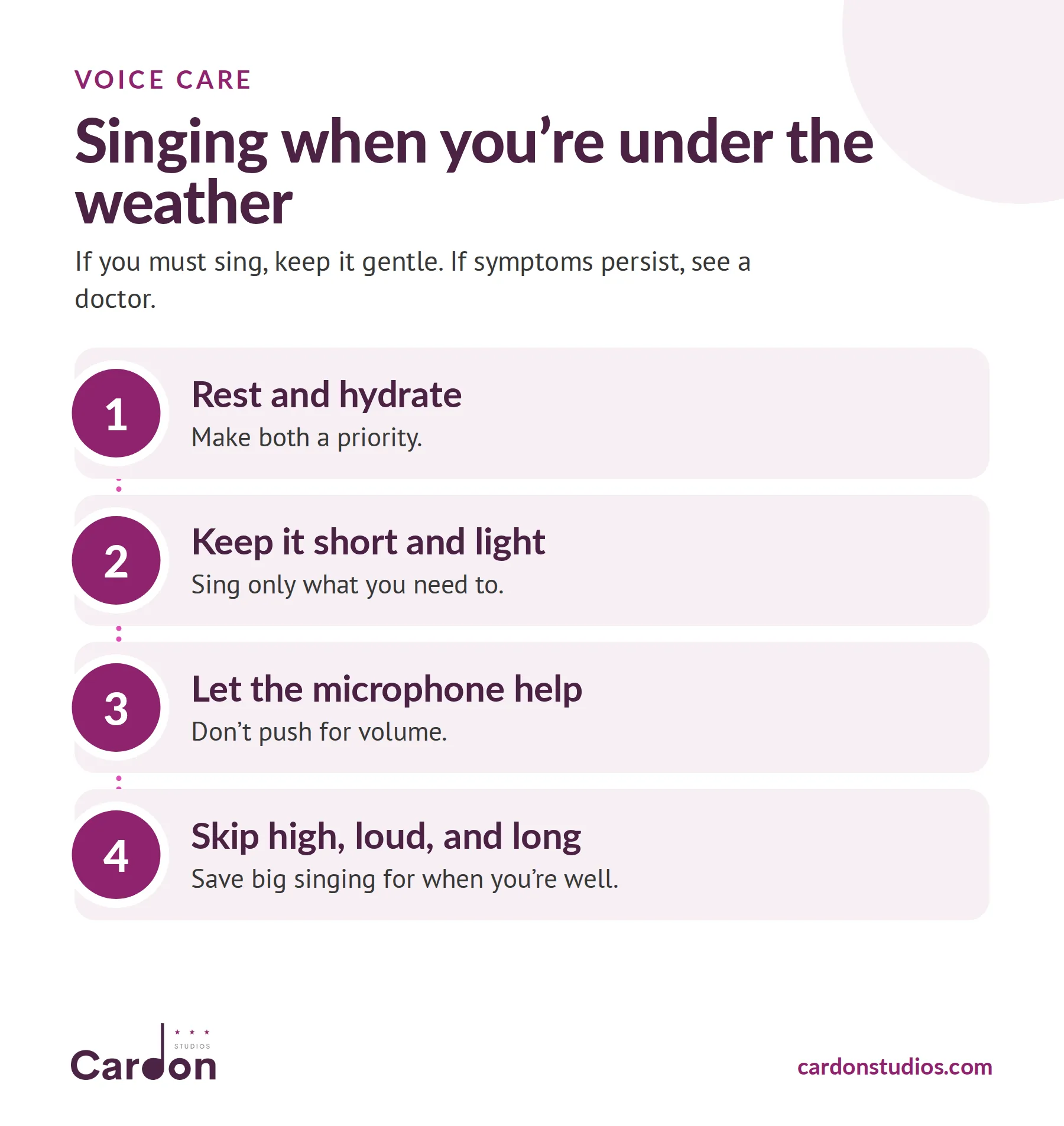
- Rest and hydrate. Make both a priority in the days around the performance.
- Keep it short and light. Sing only what you need to, and skip extra run-throughs.
- Let the microphone help. Don’t push for volume. Our guide to how to sing without straining has more habits that prevent strain.
- Skip high, loud, and long. Save your biggest singing for when you’re well.
Menthol cough drops can feel soothing, but some singers find they leave the throat feeling drier; water and steam are gentler options. If you’re considering any medication to get through an important performance, talk to your doctor first.
Gentle exercises that help your voice work efficiently
Semi-occluded vocal tract (SOVT) exercises, such as lip trills, humming, and singing through a straw, partly close off the mouth to create gentle back pressure. Many teachers use them throughout the range to help the voice work efficiently, and they’re a gentle way to warm up on days your voice feels tired.
Food, reflux, and your voice
You may have heard that dairy or peanut butter is bad for singers. The real issue is the coating feel of thicker foods, and singers differ a lot in how much it bothers them. It’s up to you whether you avoid these foods always, only on performance days, or not at all.
Acid reflux is no friend to the voice. If you’re prone to it, notice which foods seem to set it off; coffee, alcohol, and spicy foods are common culprits for many people. If reflux seems to be affecting your voice, talk to your doctor.
Medications and supplements
Some medications can affect your voice, for example by drying you out. Ask your doctor or pharmacist about the voice-related effects of anything you take regularly, and check with them before starting any medication or supplement for your voice. If you take something drying, as many allergy medications are, drink extra water on those days.
Vocal hygiene for singers: a daily checklist
Vocal hygiene means the everyday habits that protect your vocal folds between practice sessions: how much water you drink, how you use your speaking voice, the air you breathe, and how much rest your voice gets. It’s the practical answer to how to take care of your voice as a singer, because most of your voice use happens outside lessons and rehearsals.
The National Institute on Deafness and Other Communication Disorders (NIDCD) lists the core habits in its guide to taking care of your voice: stay hydrated, rest your voice through the day, avoid smoke, and don’t speak or sing when your voice is hoarse or tired. Here is how those habits fit into a singer’s day.
Take vocal naps
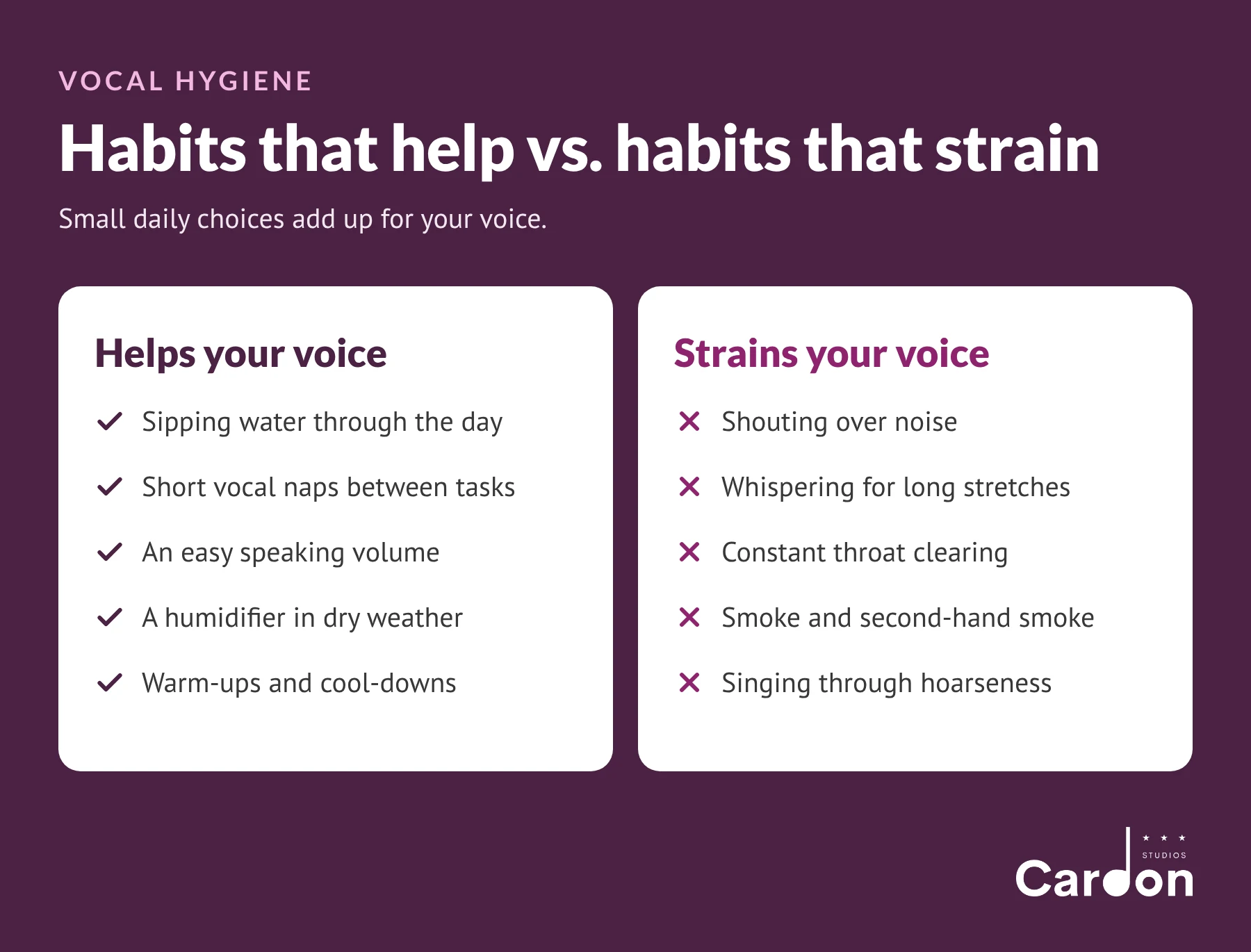
NIDCD recommends “vocal naps”: short stretches of quiet spread through the day. On a heavy singing day, plan a few quiet breaks, such as texting instead of calling, or a quiet commute instead of talking over traffic noise. The breaks add up, and your voice arrives at the evening’s rehearsal fresher.
Watch the extremes of your speaking voice
Shouting is the obvious strain, but NIDCD notes that whispering and talking too softly can stress your voice too. Speak at a comfortable, easy volume, and move closer to people in noisy rooms instead of raising your voice. If you clear your throat often, try a sip of water or a gentle swallow instead.
Mind the air around you
Dry air is hard on the throat, especially in winter. NIDCD suggests running a humidifier at home, with about 30 percent humidity, and avoiding smoke and second-hand smoke. It also suggests skipping mouthwash or gargles that contain alcohol or irritating chemicals.
Balance caffeine and alcohol with water
You don’t have to give up coffee. If you drink caffeinated drinks or alcohol, NIDCD advises balancing them with plenty of water.
Use this plan as a starting point and adjust it to your schedule.
| Time of day | Vocal hygiene habit |
|---|---|
| Morning | Drink a glass of water and speak gently at first. Hum softly or do a few lip trills to wake up your voice. |
| Before you sing | Warm up with easy sounds in the middle of your range before you move higher or louder. |
| During practice | Keep water nearby and take short quiet breaks between songs. Stop if anything hurts. |
| After singing | Cool down with gentle humming or slides, then give your voice a quiet stretch. |
| Evening | Keep conversations at an easy volume, wind down, and aim for a full night’s sleep. |
If your voice still feels tired or hoarse after a good routine, that’s a reason to see a doctor, not to push through. Our guide to common vocal problems explains what different symptoms can mean, and how your voice works shows what’s happening inside your throat when you sing.
Hormones
Hormonal changes affect the whole body, including your voice. Many singers notice changes across the menstrual cycle, during pregnancy, or around menopause. Read our guide to singing through your cycle for more on this topic.
Emotional and mental well-being
Singing is at once very personal and often very public. Whether you’re processing your own emotions or taking on the emotional weight of the songs you perform, check in on your mental wellness often. Singers are often sensitive people, and caring for yourself helps you care for your audience’s experience too.
When to see a doctor
See a doctor if hoarseness or voice changes don’t improve with rest, if singing or speaking hurts, or if you lose range or control you used to have. An ear, nose, and throat doctor (ENT), ideally a laryngologist who specializes in voice, can examine your vocal folds.
From the studio
Teachers can’t diagnose voice problems, but they can hear when a voice is working harder than it should. Cardon Studios lessons focus on healthy technique, and between lessons you can send a video for a personalized response from your teacher within two business days.
Online voice lessons
Build healthy habits with a teacher
One monthly membership includes four private online voice lessons, one video coaching submission, the Learning Library, and member online events, with a teacher matched to your style, goals, age, and schedule.
Common questions about vocal health
How do I take care of my voice as a singer?
Stay hydrated, warm up and cool down, get enough sleep, avoid shouting and smoke, and save your speaking voice on heavy singing days. Regular practice with good technique matters too.
Is dairy bad for singing?
Not for everyone. Thicker foods can leave a coating feeling that bothers some singers more than others. Notice how your voice responds and decide for yourself, especially on performance days.
Should I sing when I’m sick?
Rest if you can. If you must sing, keep it short and light, hydrate well, let the microphone help, and avoid high, loud, and long singing. If symptoms persist, see a doctor.
When should I see a doctor about my voice?
If hoarseness or voice changes don’t improve with rest, if singing or speaking hurts, or if you notice lost range or control. An ENT or laryngologist can examine your vocal folds.
What is vocal hygiene for singers?
Vocal hygiene is the set of daily habits that keep your voice healthy: staying hydrated, resting your voice through the day, avoiding smoke, shouting and long whispering, and not singing through hoarseness. For singers it also includes warming up and cooling down.
What is vocal health?
Vocal health means your voice works easily and reliably: it isn’t hoarse or painful, and you keep the range and control you’re used to. NIDCD lists hoarseness, losing high notes, a throat that often feels raw or strained, and frequent throat clearing as signs to see a doctor.