


Private voice lessons in the United States commonly cost around $60 for an hour with an independent teacher. A national survey of independent music teachers found a median rate of $60 and an average of about $66 for an hour-long private lesson in the 2023–24 school year. What you’ll actually pay depends on the teacher, where you live, how long and how often you meet, and what’s included beyond the lesson itself. Here’s how to make sense of the options.
Key takeaways
- A widely cited benchmark: a median of $60 for an hour-long private lesson with an independent music teacher (2023–24).
- Teacher experience, location, lesson length and format move the price up or down.
- Compare what’s included, not just the price per lesson: feedback between lessons, practice materials and scheduling all add value.
- A Cardon Studios membership is $295 a month and includes four private online lessons plus support between them.
What voice lessons typically cost
The most useful national benchmark comes from the Music Teachers National Association’s 2024 member survey. Among the independent studio teachers who responded, the rate for an hour-long private lesson in the 2023–24 school year averaged $65.72, with a median of $60. Rates varied widely, from teachers who charged very little to those who charged several hundred dollars.
Two things to keep in mind. First, the survey covers music teachers of all kinds, not only voice teachers, so treat it as a benchmark rather than a price list. Second, many voice students take shorter lessons, especially beginners and younger singers, and shorter lessons generally cost less than an hour. Always compare like with like.
What affects the price of voice lessons
Six factors explain most of the difference between one teacher’s rate and another’s.
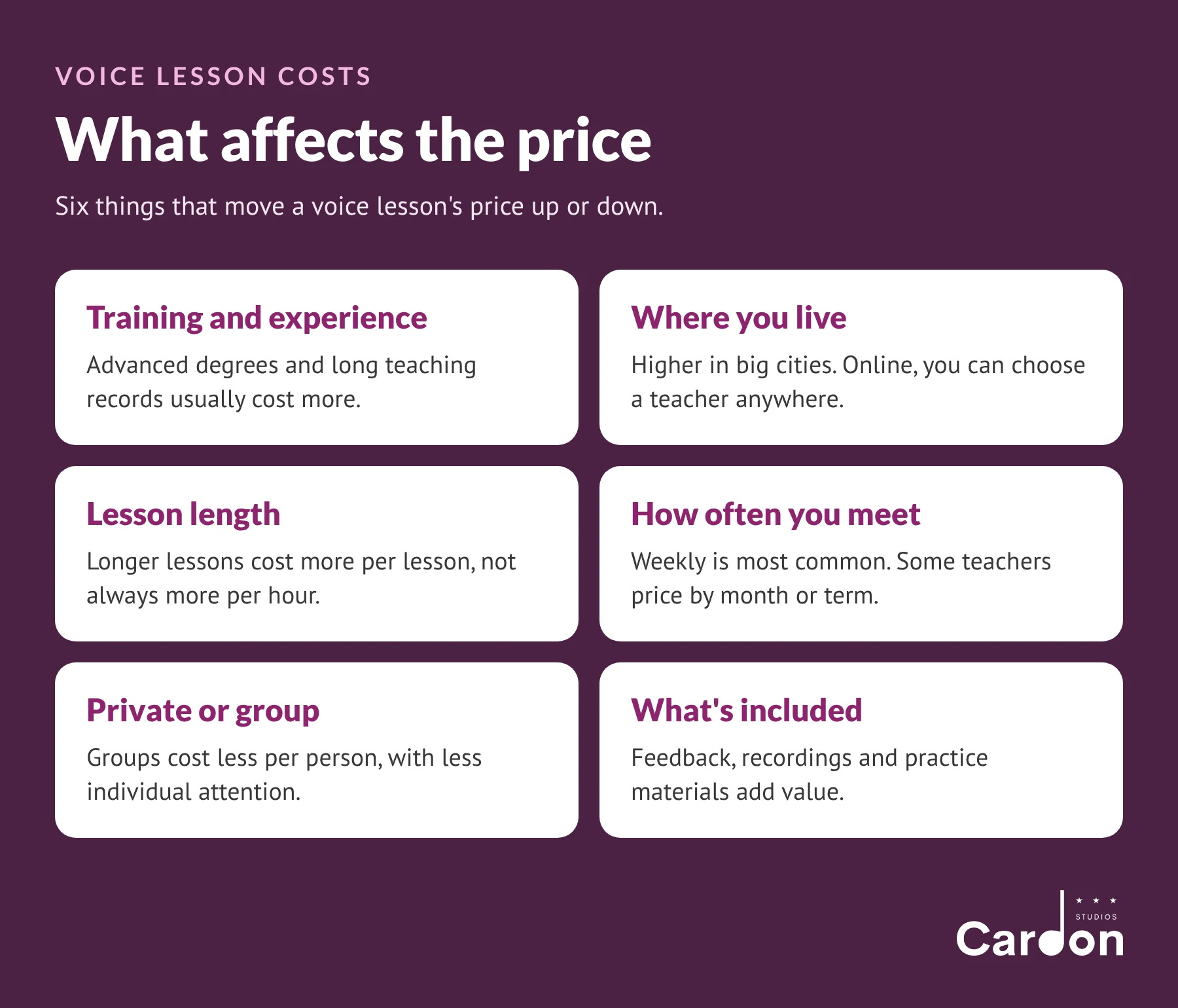
| Factor | How it affects the price |
|---|---|
| Teacher training and experience | Teachers with advanced degrees, performing careers or long teaching records usually charge more. |
| Where you live | Rates tend to be higher in large cities and lower in small towns. Online lessons let you choose a teacher regardless of location. |
| Lesson length | Longer lessons cost more per lesson, though not always more per hour. |
| How often you meet | Weekly lessons are the most common rhythm. Some teachers price monthly or by the term. |
| Private or group | Group classes cost less per person but give each singer less individual attention. |
| What’s included | Feedback between lessons, recordings, practice materials and performance opportunities add value beyond the lesson itself. |
Per-lesson pricing vs. memberships
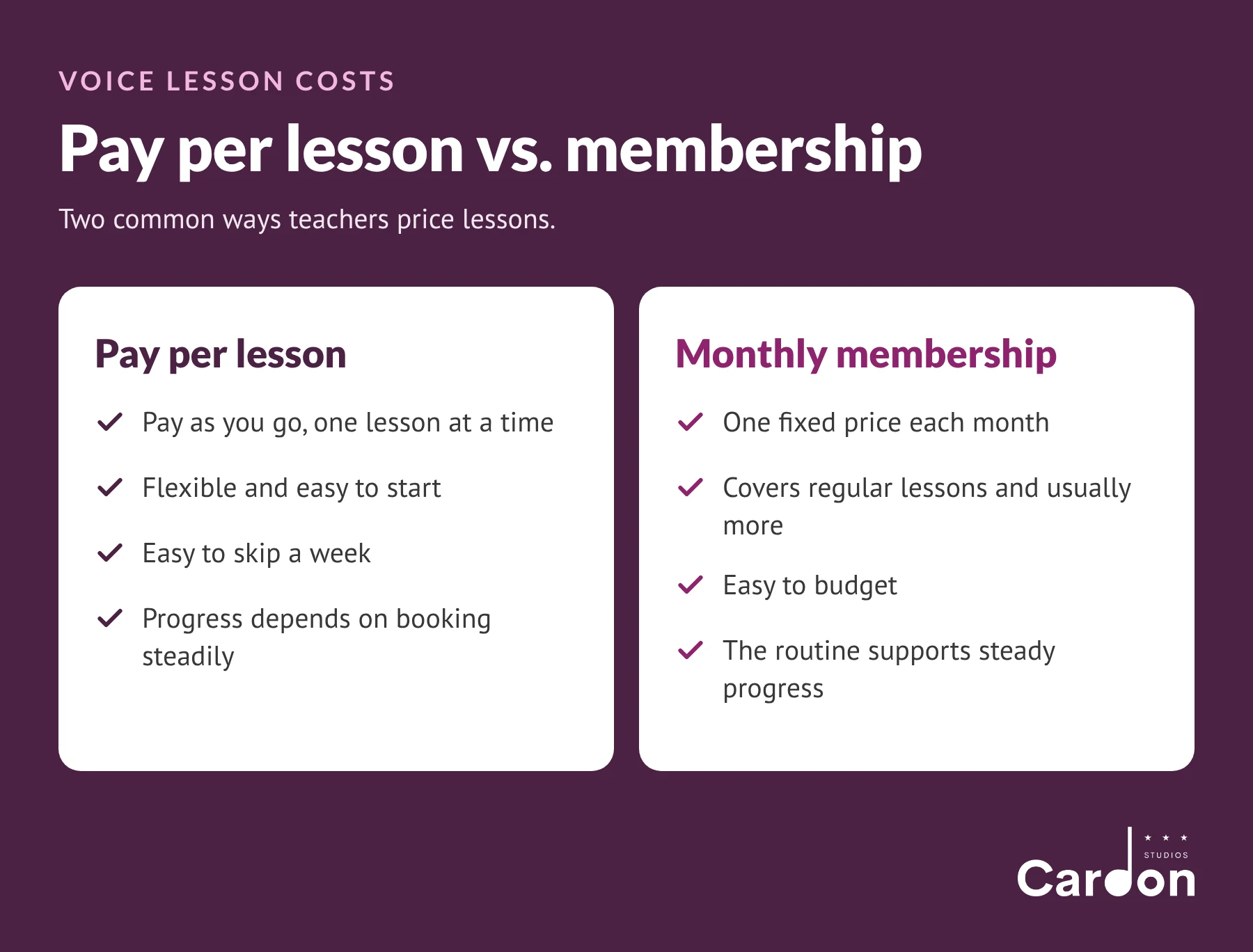
Voice teachers price lessons in a few common ways:
- Pay per lesson. Flexible, and easy to start, but it can make weekly lessons feel optional, and progress depends on consistency.
- Packages or terms. A set number of lessons paid in advance, often for a semester. Good for commitment; less flexible if your schedule changes.
- Monthly memberships. A fixed monthly price that covers regular lessons and usually more. Easy to budget, and the structure supports steady progress.
Whichever model you choose, check how rescheduling, missed lessons and cancellation work before you sign up.
What a Cardon Studios membership includes
Cardon Studios offers one membership for singers ages 10 and up in the United States and Canada: $295 a month, billed monthly, month to month. Each month includes:
- Four private online voice lessons, live and one-on-one over Zoom, with a teacher matched to your style, goals, age and schedule.
- One video coaching submission. Send a recording of a song or exercise, and your teacher replies with feedback and practice tips within 72 hours.
- The Learning Library, with warm-ups, exercises and practice materials for between lessons.
- Member online events, including open mics, group classes and showcases.
You schedule lessons yourself in your online Student Account and can rewatch your lesson recordings there. Unused lessons don’t roll over to the next month. For singers under 18, a parent or guardian creates the account and pays. The membership page has the current details, and what to expect from voice lessons explains how the first weeks usually go.
Other costs to plan for
Lessons are the main cost, but a few smaller ones come up for many singers. None of them is required to start, and most singers already have what they need.
- Sheet music. Many songs are available as single-song downloads, and a teacher can suggest books that last a long time. Buying legal copies matters, especially for auditions.
- Accompaniment. For recitals, competitions and some auditions, you may need a pianist or a recorded backing track. Ask about this early so it isn’t a surprise.
- A practice setup. A phone with a recording app and a quiet room is enough for most practice. Some singers add headphones or a simple microphone later.
- Performance fees. Festivals, competitions and some programs charge entry or registration fees.
Online lessons also change the math in ways a price list doesn’t show. There’s no travel time or cost, lessons fit more easily around school and work, and you can choose a teacher who specializes in your style even if no one nearby does. All you need is a computer, tablet or phone with a camera and microphone, an internet connection and a quiet place to sing. Our guide to optimizing audio for Zoom lessons helps you get good sound from what you already have.
How much do singing lessons cost each month? Work out your real number
The quickest way to answer “how much do singing lessons cost?” for your own situation is to price a typical month, not a single lesson. These four steps turn two very different offers into numbers you can compare.
- Count the lessons you’ll actually take. Weekly lessons mean about four a month. Multiply a per-lesson rate by that number, or check how many lessons a package or membership already covers.
- Add what you’d otherwise pay for separately. Feedback between lessons, lesson recordings, practice materials and performance opportunities are extras with some teachers and included with others. Note which ones each option includes, and what you’d pay elsewhere for the ones you want.
- Add the cost of getting there. For lessons you travel to, count fuel or fares and the time each trip takes. Online lessons remove this line from the budget.
- Look at a whole school year, not one month. Singing improves over months of steady work, so multiply your monthly figure across the time you plan to study. One-time registration fees and books matter more over a year than they seem to in the first month.
The result is a monthly figure you can set beside any membership price. If you’re just starting out, our beginner’s roadmap to singing helps you decide what you need from lessons before you compare.
How to compare your options
Price per lesson is only one part of the picture. Before you decide, ask each teacher or studio:
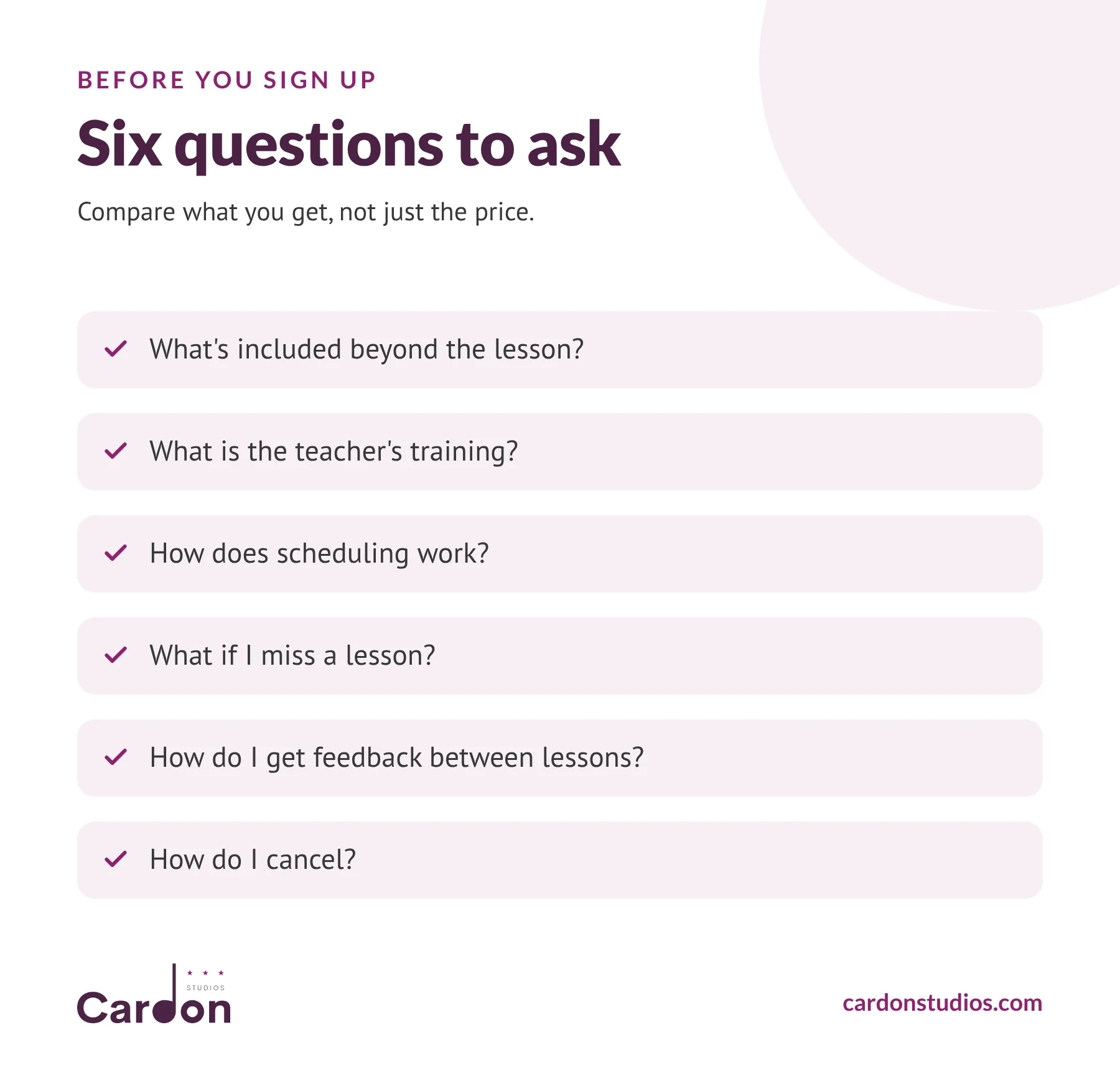
- What’s included? Just the lesson, or also feedback, recordings and practice materials?
- What is the teacher’s training? Look for voice-specific training and experience with singers like you. Our guide to choosing a voice teacher covers what to look for.
- How does scheduling work? Can you book and change lessons easily?
- What if you miss a lesson? Is there a make-up policy?
- How do you get help between lessons? Most progress happens in practice, so support between lessons matters.
- How do you cancel? Month-to-month or a longer commitment?
If you’re weighing online lessons, read do online voice lessons work? for what to expect over video.
Are voice lessons worth the cost?
For most singers, yes, if you take them regularly and practice between them. A teacher hears what you can’t hear in yourself, gives you exercises for your specific voice, and helps you avoid habits that cause strain. That shortens the path to the singing you want, whether that’s a school musical, a choir audition, a band or simply singing with more confidence. Our article Are Singing Lessons Worth It? goes into the benefits in more detail.
Getting the most from what you pay
- Practice between lessons. Short, regular practice turns lesson time into progress. See how to practice between voice lessons.
- Bring goals and questions. A song you’re working on or a specific problem makes each lesson more focused.
- Use every part of what’s included. Feedback between lessons, recordings and practice materials are part of the value.
- Be consistent. Weekly lessons build skills far faster than occasional ones.
Parents comparing options for a teen can also read our parent’s guide to voice lessons.
From the studio
We built the Cardon Studios membership around what helps singers progress: regular private lessons with a teacher matched to you, a way to get feedback between lessons, and places to practice and perform. One monthly price covers all of it, so you can plan for steady progress instead of booking one lesson at a time.
Online voice lessons
See what a membership includes
One monthly membership includes four private online voice lessons, one video coaching submission, the Learning Library, and member online events, with a teacher matched to your style, goals, age, and schedule.
Common questions about voice lesson costs
How much do voice lessons cost per month?
It depends on how often you meet and what’s included. With weekly lessons, a month usually means four lessons. A Cardon Studios membership is $295 a month for four private online lessons, one video coaching submission, the Learning Library and member online events.
What is the average cost of a voice lesson?
A national survey of independent music teachers found a median of $60 and an average of about $66 for an hour-long private lesson in the 2023–24 school year. Rates vary widely by teacher and location.
Are online voice lessons cheaper?
Not necessarily, but online lessons save travel time and let you choose a teacher anywhere, so you can find the right fit at a price that works for you. You need a device with a camera and microphone, an internet connection and a quiet place to sing.
How often should I take voice lessons?
Weekly lessons are the most common and give you steady progress with time to practice in between. Less frequent lessons can work for experienced singers maintaining their skills.
Are voice lessons worth it for teenagers?
For teens who want to sing in school musicals, choirs or auditions, regular lessons build healthy technique and confidence during years when the voice is changing. Cardon Studios teaches singers ages 10 and up.
Do singing lessons cost the same as voice lessons?
Yes. “Singing lessons” and “voice lessons” are two names for the same thing, so the cost of singing lessons depends on the same factors described above: the teacher, lesson length, how often you meet and what’s included. Compare offers by their monthly total rather than by what they’re called.