

Yes, you can practice singing in an apartment without driving your neighbors, roommates, or family up the wall. The trick is to choose the right room and time, do most of your work with quieter exercises, dampen the sound where it leaks, and save full voice for when it counts. Here’s how to set that up.
Key takeaways
- Kitchens, bathrooms, and walk-in closets usually carry less sound to neighbors than bedrooms or living rooms.
- Most practice can happen at lower volume: humming, lip trills, straw singing, a vocal dampener, or half voice.
- Doors leak the most sound. A heavy curtain, blankets, or foam can make a real difference.
- A friendly word with your neighbors about when you practice goes a long way.
Pick the right room
Some rooms carry sound to your neighbors far less than others. Kitchens and bathrooms often share walls with other kitchens and bathrooms, with plumbing and dead space in between, so less sound travels through. (And who doesn’t love a little bathroom reverb?) Walk-in closets make surprisingly good practice booths, because rows of clothes absorb sound and closets often back onto other closets or hallways rather than someone’s bedroom.
For many singers, simply committing to one of these spaces is enough. Avoid practicing against a wall you share with a neighbor’s bedroom, and face into the room rather than toward a shared wall.
Pick the right time
When you sing matters as much as where. Check your lease or building rules for quiet hours, and plan your louder practice for the middle of the day, when neighbors are more likely to be out or awake. Keep early mornings and late evenings for quieter work. A regular schedule helps too: people tend to mind a predictable half hour far less than sound that seems to come at random.
Practice by feel with quieter exercises
You don’t need full volume for most of your practice. Many of the exercises that build coordination are naturally quiet, and practicing by feel rather than by sound is a useful skill in its own right. Gigging singers often can’t hear themselves well through stage monitors, so learning what good singing feels like pays off later.
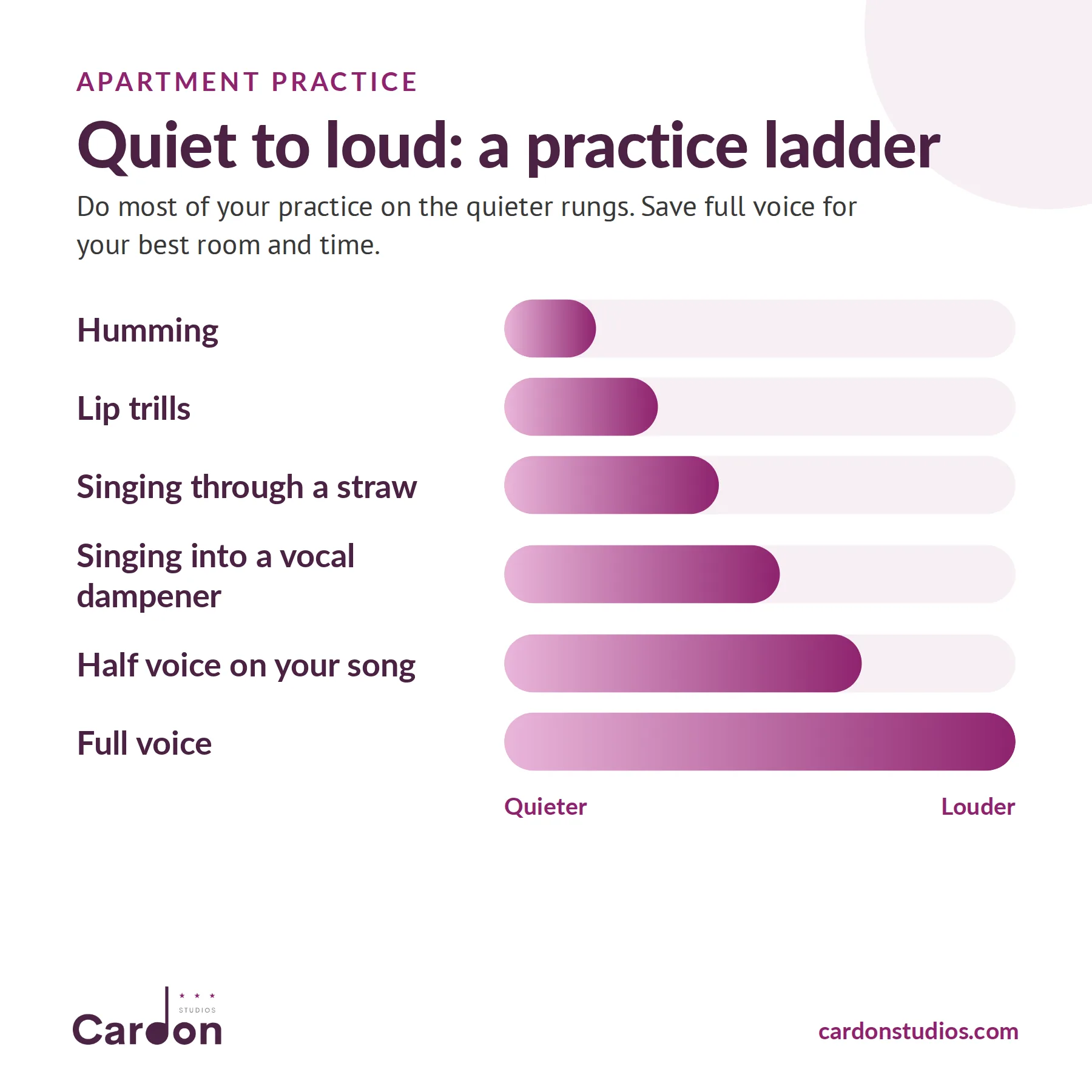
- Humming. A gentle way to warm up and find resonance at low volume.
- Lip trills. Light back pressure helps your breath and voice coordinate.
- Singing through a straw. One of the quietest ways to work through your range.
- Singing into a vocal dampener. It muffles your sound so you can repeat a passage at fuller effort.
- Half voice on your song. Work out phrasing, words, and breath points at moderate volume.
- Full voice. Save it for your best room and time, so you still practice the real thing.
Your teacher can suggest which exercises suit your current goals. For more on making each session count, read Practicing: How vs. How Much.
Try a vocal practice dampener
A vocal dampener is a handheld device you sing into that muffles much of your sound. The Beltbox is one well-known example. It’s compact and budget-friendly, and it lets you practice at fuller effort without filling the apartment with sound.
Because it cuts the sound, a dampener also gives you less to hear, which is both good and bad. It’s great for repeating a coordination until it becomes muscle memory, relying on how your voice feels rather than how it sounds. You’ll still want to sing full out into the room from time to time, so you know what your voice actually sounds like. Recording those sessions helps; see how to record yourself singing.
Dampen the sound where it leaks
A small investment can go a long way. Sound-absorbing foam, sound-dampening blankets, or, if you’re willing to spend more, a portable vocal booth can seriously reduce how much of your voice crosses the walls. The goal isn’t silence. Anything that adds another layer for sound waves to travel through helps break them up before they reach someone else’s space.
Don’t forget the doors. They’re usually the main culprit, because walls tend to have some insulation while doors range from light and hollow to heavy and solid. If your door seems to be the problem, a heavy doorway sound curtain could be the fix you need. Full isolation booths are the most effective option and also the most expensive, so think through your needs, and ask your teacher, before you buy one.
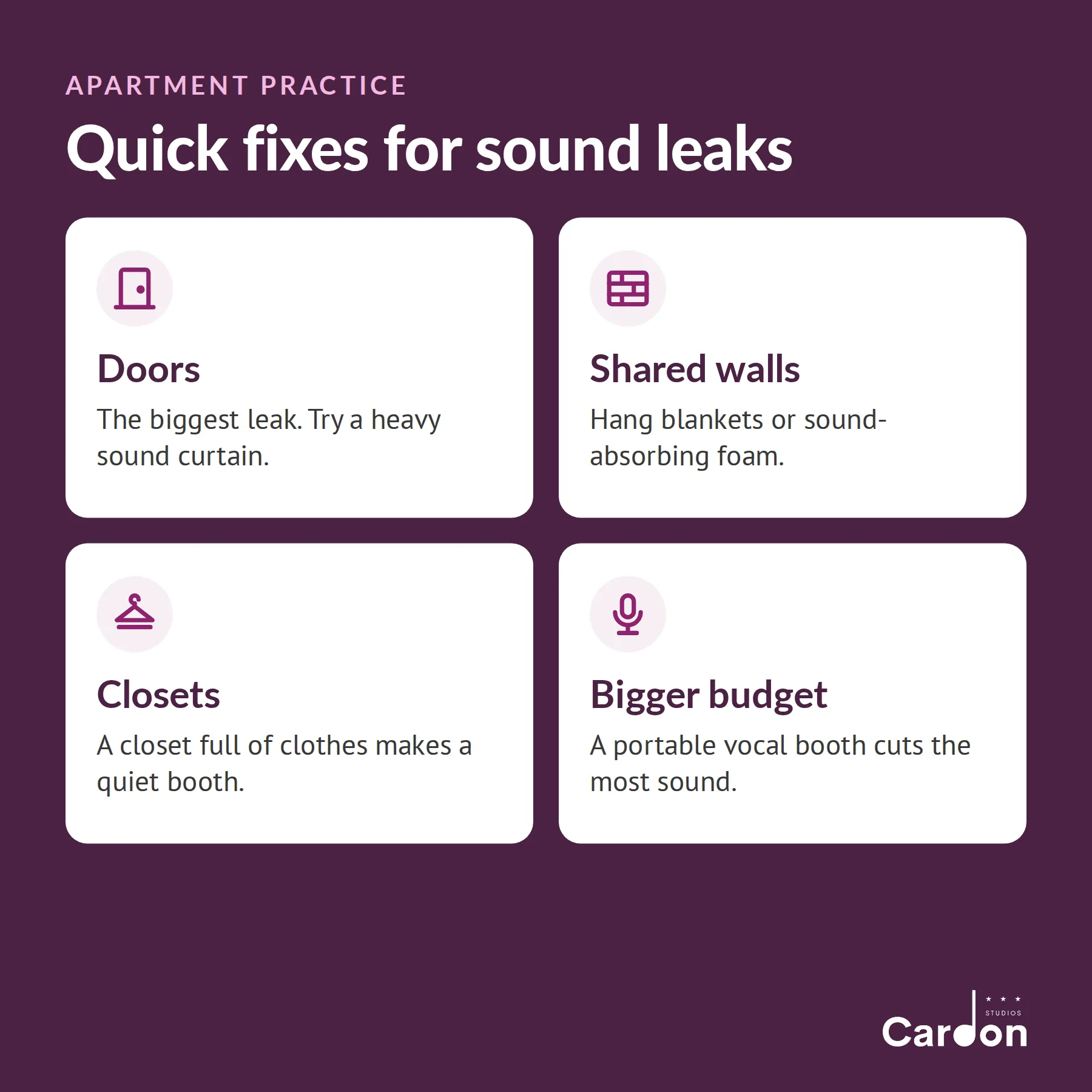
- Doors: hang a heavy sound curtain.
- Shared walls: cover them with blankets or sound-absorbing foam.
- Closets: sing among the clothes for a ready-made booth.
- Bigger budget: a portable vocal booth cuts the most sound.
Talk to your neighbors
A quick, friendly conversation often solves more than soundproofing does. Let your neighbors or roommates know you’re working on your singing and when you usually practice, and ask them to tell you if it ever bothers them. Most people are far more relaxed about sound they expect, and you’ll worry less when you know where you stand.
Taking online lessons from home
If you take online lessons, feeling comfortable singing out at home is part of the deal. Live online lessons take place over Zoom from wherever you sing. All you need is a computer, tablet, or phone with a camera and microphone, an internet connection, and a quiet place to sing.
From the studio
Because Cardon Studios lessons happen live online, your teacher works with you in your real practice space. If volume is a concern at home, say so in your lesson; your teacher can build your practice around exercises that suit it. Between lessons, you can send a video of a practice session for a personalized response within 72 hours.
When home practice isn’t possible
If practicing at home just isn’t in the cards, you have options. Some singers practice, and even join their lessons, from their cars. Sitting makes low, easy breathing harder, so pay extra attention to posture and breath support, but car singing beats no singing. You could also ask local places of worship about renting their choir rooms, or trading volunteer hours for practice time, and check with nearby colleges and schools with music programs, which often have practice rooms.
Online voice lessons
Practice at home with a teacher behind you
One monthly membership includes four private online voice lessons, one video coaching submission, the Learning Library, and member online events, with a teacher matched to your style, goals, age, and schedule.
Common questions about singing in an apartment
Can I practice singing in an apartment without bothering my neighbors?
Usually, yes. Choose a room that shares fewer walls with your neighbors, do most of your practice with quieter exercises, dampen doors and shared walls, and keep louder singing to reasonable hours.
What’s the best time to practice singing in an apartment?
Midday is usually safest. Check your lease or building rules for quiet hours, and save early mornings and late evenings for quieter exercises such as humming and lip trills.
Do vocal dampeners like the Beltbox work?
They muffle a lot of sound, which makes fuller-effort practice possible in a small space. You’ll hear less of yourself, so pair dampened practice with some full-voice singing and a recording now and then.
Can I take online voice lessons from an apartment?
Yes. You need a computer, tablet, or phone with a camera and microphone, an internet connection, and a quiet place to sing. Tell your teacher about any volume limits at home so your practice plan fits them.