

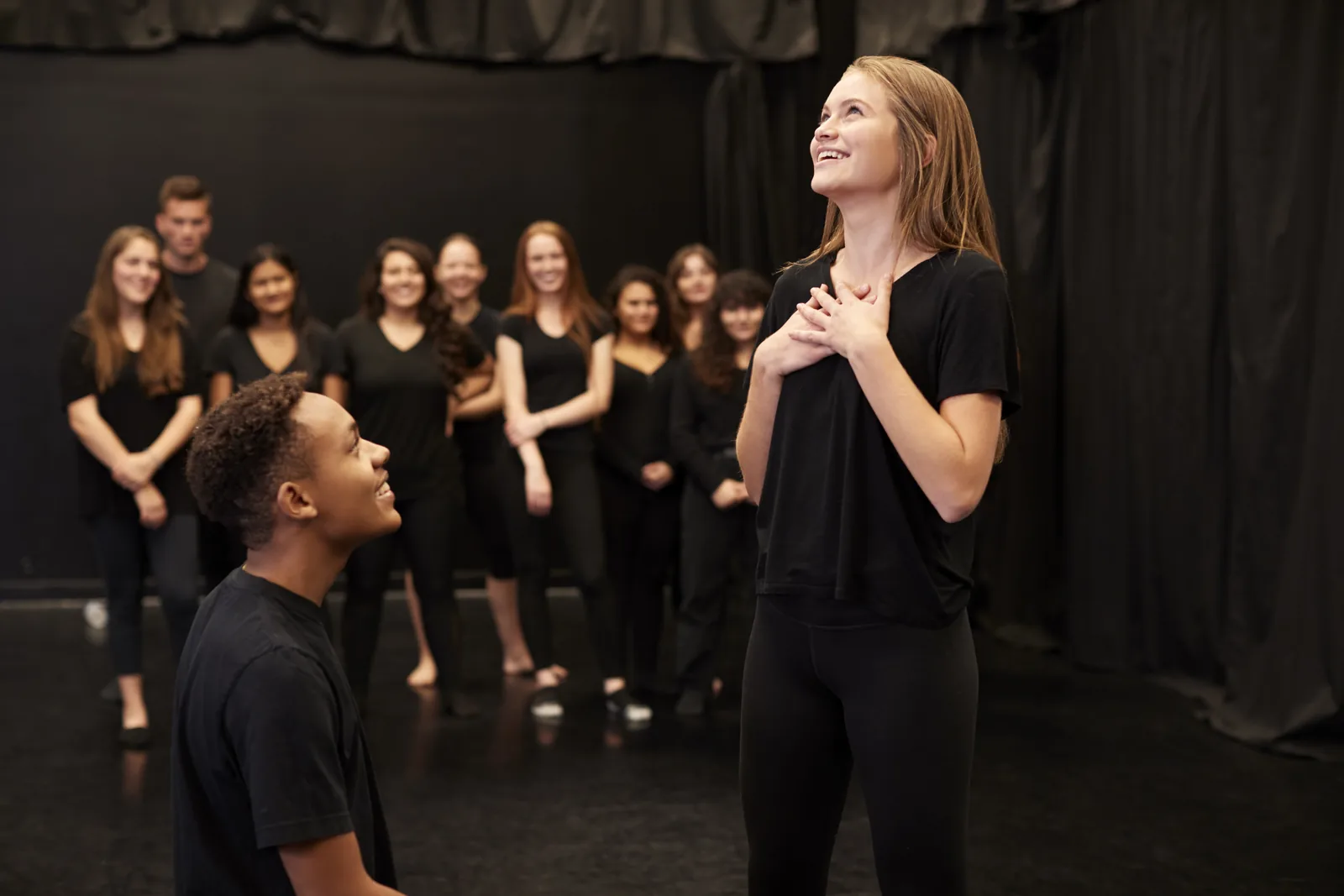
The best musical theatre songs for teens are sung by characters close to your age, sit comfortably in your current range, and tell a story you can connect with. Good options include “Waiting for Life” from Once on This Island, “I Know Things Now” from Into the Woods, “What It Means to Be a Friend” from 13 and “Letter from the Refuge” from Newsies. Below are song ideas for teen singers, each with the show, the writers, the character, and the age and range the licensor lists for the role, plus tips for choosing and preparing a song.
Key takeaways
- Choose characters near your own age, so the song fits you and the story makes sense.
- Pick songs that sit comfortably in your voice now, especially if your voice is changing.
- Check the whole song and show for content that suits your age and the audition.
- Have a ballad and an up-tempo song ready for school and community auditions.
What makes a good musical theatre song for a teen
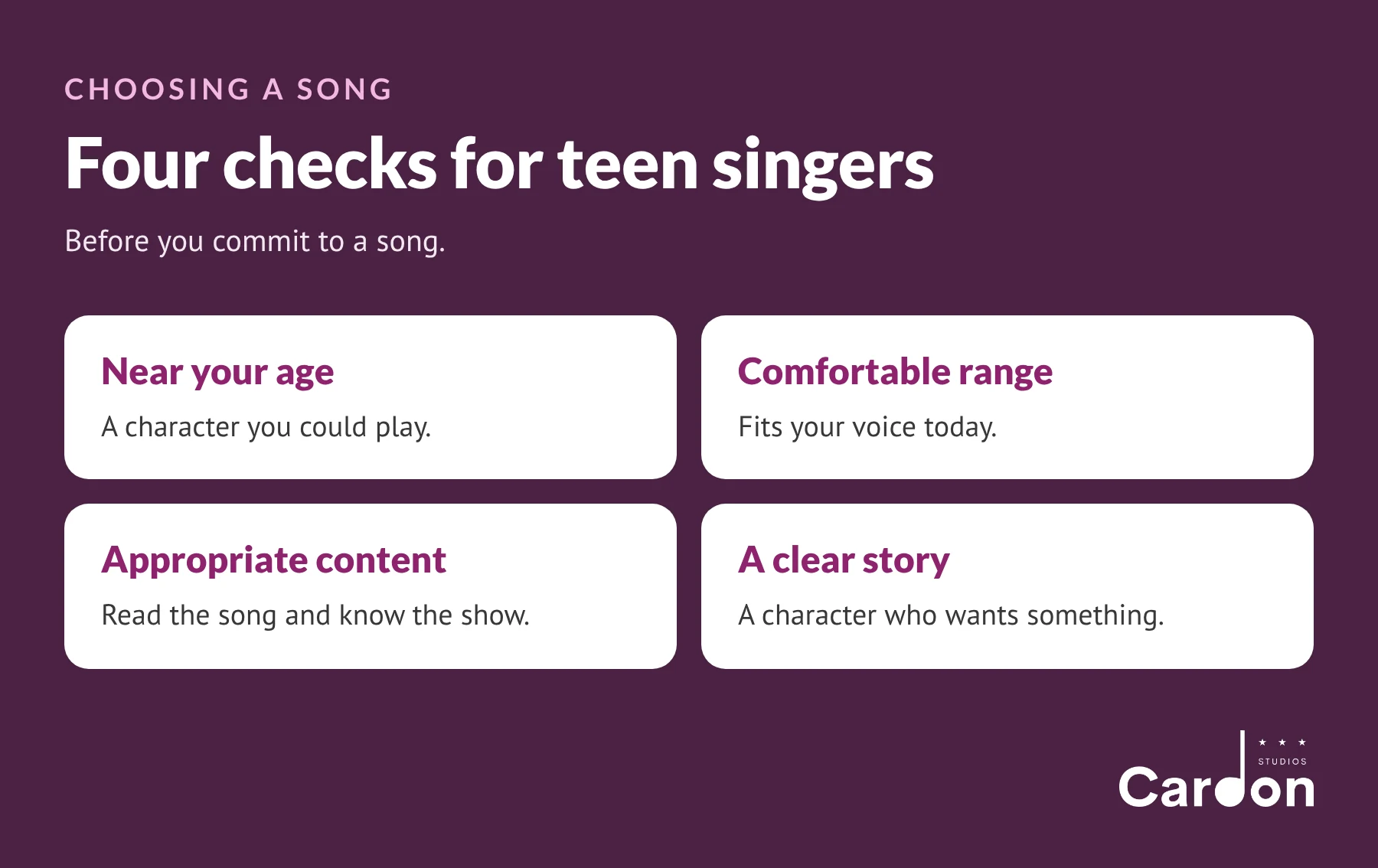
A great song for a teen singer is one you can sing well and believe in. Look for:
- A character near your age. Directors want to see you as someone you could play. Songs for teenage characters let you be yourself while acting the role.
- A comfortable range. Choose a song that sits easily in your voice today, not the voice you hope to have in a few years.
- Appropriate content. Read the whole song and know the show’s story. Some songs from shows with young characters still deal with mature themes.
- A clear story. The best audition songs have a character who wants something and a moment where something changes.
- Something you enjoy. You’ll practice more, and perform better, with a song you love.
The songs below come from musicals licensed by Music Theatre International. For each, we’ve listed the character’s age range and full role range from MTI’s published character breakdowns, using the system in which C4 is middle C. A role’s range covers the whole part, so a single song may sit in a narrower band. Listen to each song in full and check the sheet music before choosing.
Songs for higher voices
| Song | Show and writers | Character (role age) | Role range |
|---|---|---|---|
| “Waiting for Life” | Once on This Island (Stephen Flaherty and Lynn Ahrens) | Ti Moune (15 to 20) | G3 to E5 |
| “I Know Things Now” | Into the Woods (Stephen Sondheim) | Little Red Ridinghood (15 to 20) | Bb3 to F5 |
| “Good Morning Baltimore” | Hairspray (Marc Shaiman and Scott Wittman) | Tracy Turnblad (15 to 20) | G3 to G5 |
| “What It Means to Be a Friend” | 13 (Jason Robert Brown) | Patrice (13) | Eb3 to E5 |
| “Part of Your World” | The Little Mermaid (Alan Menken and Howard Ashman) | Ariel (16 to 25) | Ab3 to Gb5 |
“Waiting for Life” is a hopeful, driving song for a dreamer with big plans. “I Know Things Now” is a witty Sondheim song about growing up, great for showing acting and diction. “Good Morning Baltimore” is a bright, joyful up-tempo number with plenty of energy. “What It Means to Be a Friend” is a heartfelt ballad written for a 13-year-old character. “Part of Your World” is very well known, so make sure you can bring something personal to it. If you’re working on belting, read how to belt safely before taking on the bigger up-tempo songs.
Songs for lower voices
| Song | Show and writers | Character (role age) | Role range |
|---|---|---|---|
| “Letter from the Refuge” | Newsies (Alan Menken and Jack Feldman) | Crutchie (13 to 17) | C3 to A4 |
| “I’m Not That Smart” | The 25th Annual Putnam County Spelling Bee (William Finn) | Leaf Coneybear | A2 to A4 |
| “Giants in the Sky” | Into the Woods (Stephen Sondheim) | Jack (listed as 20 to 30; “almost a man”) | B2 to G4 |
| “Her Voice” | The Little Mermaid (Alan Menken and Glenn Slater) | Prince Eric (listed as 20 to 30) | B2 to G4 |
“Letter from the Refuge” is a touching, character-driven song for a teenage newsie. “I’m Not That Smart” is a comic character song for a goofy, lovable speller; MTI doesn’t list an age range for Leaf, but the character is a young competitor in a spelling bee. “Giants in the Sky” is a classic Sondheim song about adventure and growing up. “Her Voice” is a romantic ballad; MTI lists Prince Eric as older, but it suits many teen voices. For more options, see our main audition song guide and audition songs for baritone.
Song details come from MTI’s published character breakdowns and the shows’ song lists.
Easy musical theatre songs: how to tell if a song suits you
An easy musical theatre song is one that sits in the middle of your voice, moves at a speed you can handle, and lets you focus on telling the story. “Easy” depends on your voice, so test a song before you commit to it rather than relying on any list, including ours.
Check these five things with the sheet music and a recording:
- The highest and lowest notes. Find them in the sheet music. You should be able to sing both comfortably on a tired day, not only after a perfect warm-up.
- Where most of the song sits. A song can touch a high note once and still be comfortable; one that stays near the top of your range for whole phrases is much harder.
- Tempo and rhythm. Fast patter, tricky rhythms and key changes take more practice. A moderate tempo with a clear beat is easier to keep steady when you’re nervous.
- Breath length. Mark where you’ll breathe. If a phrase is too long to sing without gasping, it will feel even longer in the audition room.
- The accompaniment. Some accompaniments don’t play your melody. Practice with the accompaniment early, so it doesn’t throw you on the day.
Then try a quick test. Sing the song through once at a medium volume and record yourself. If you strain, run out of breath or drift off pitch in the same spots twice, the song is a stretch for now. Ask a teacher about a lower key, or save it for next season and choose something that shows you at your best today. Our guide to singing in tune can help with passages where the pitch keeps slipping.
Tips for teen singers
Four of these tips protect your voice while it’s still developing; the full list follows.
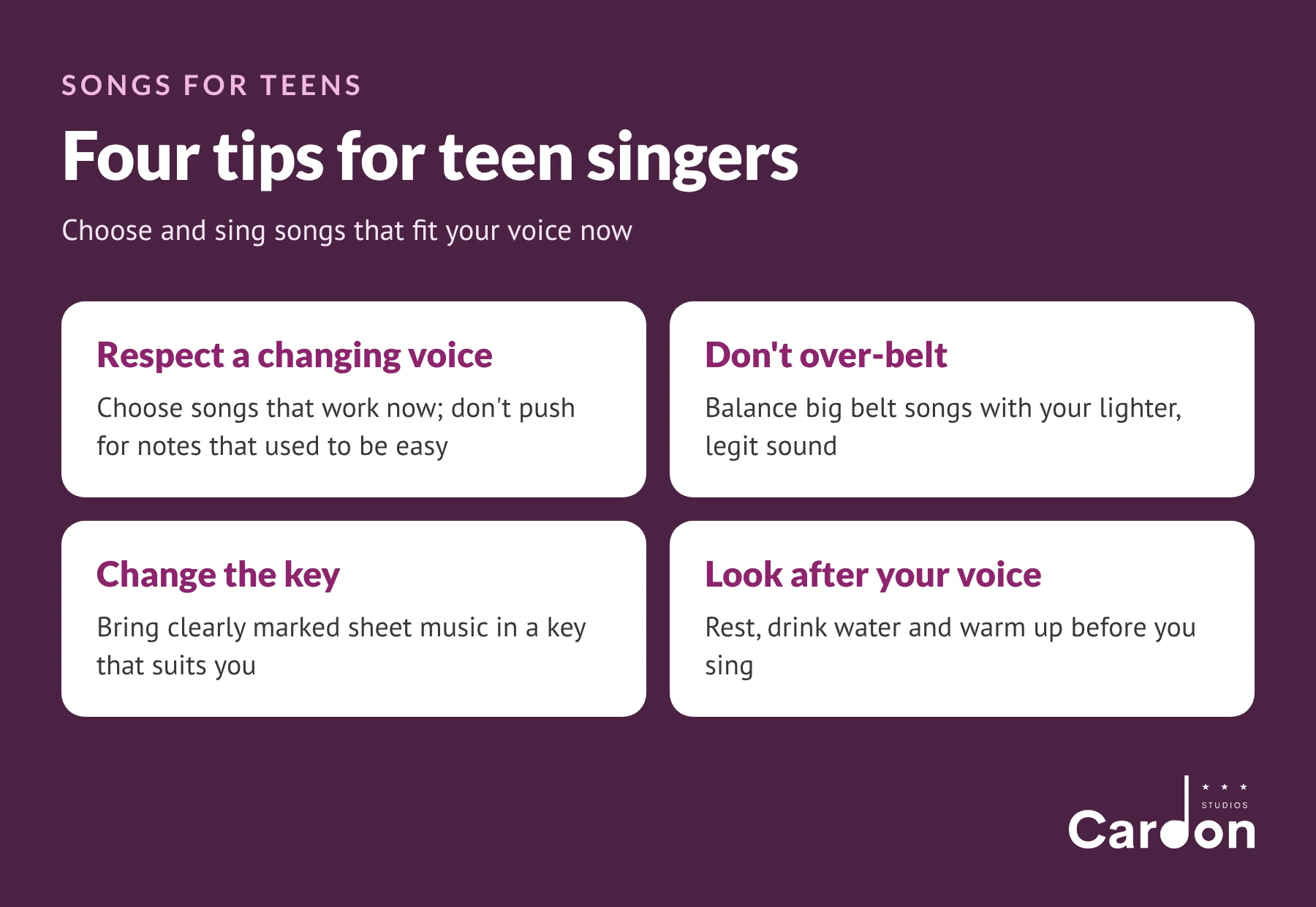
- Respect a changing voice. During the teenage years, voices change, sometimes quickly. Choose songs that work now, and don’t push for notes that used to be easy. A teacher can adjust keys and exercises as your voice develops.
- Don’t over-belt. Big belt songs are exciting, but healthy belting takes coordination. Balance them with songs that show your lighter, legit sound too.
- Change the key if you need to. Bring clearly marked sheet music in your key. A comfortable key beats a famous one.
- Try a comic song. Character songs show acting and personality as well as your voice.
- Look after your voice. Long rehearsals, shouting at games and late nights add up. Rest, drink water, and warm up before you sing; try our vocal warm-up routine.
Preparing for school musical auditions
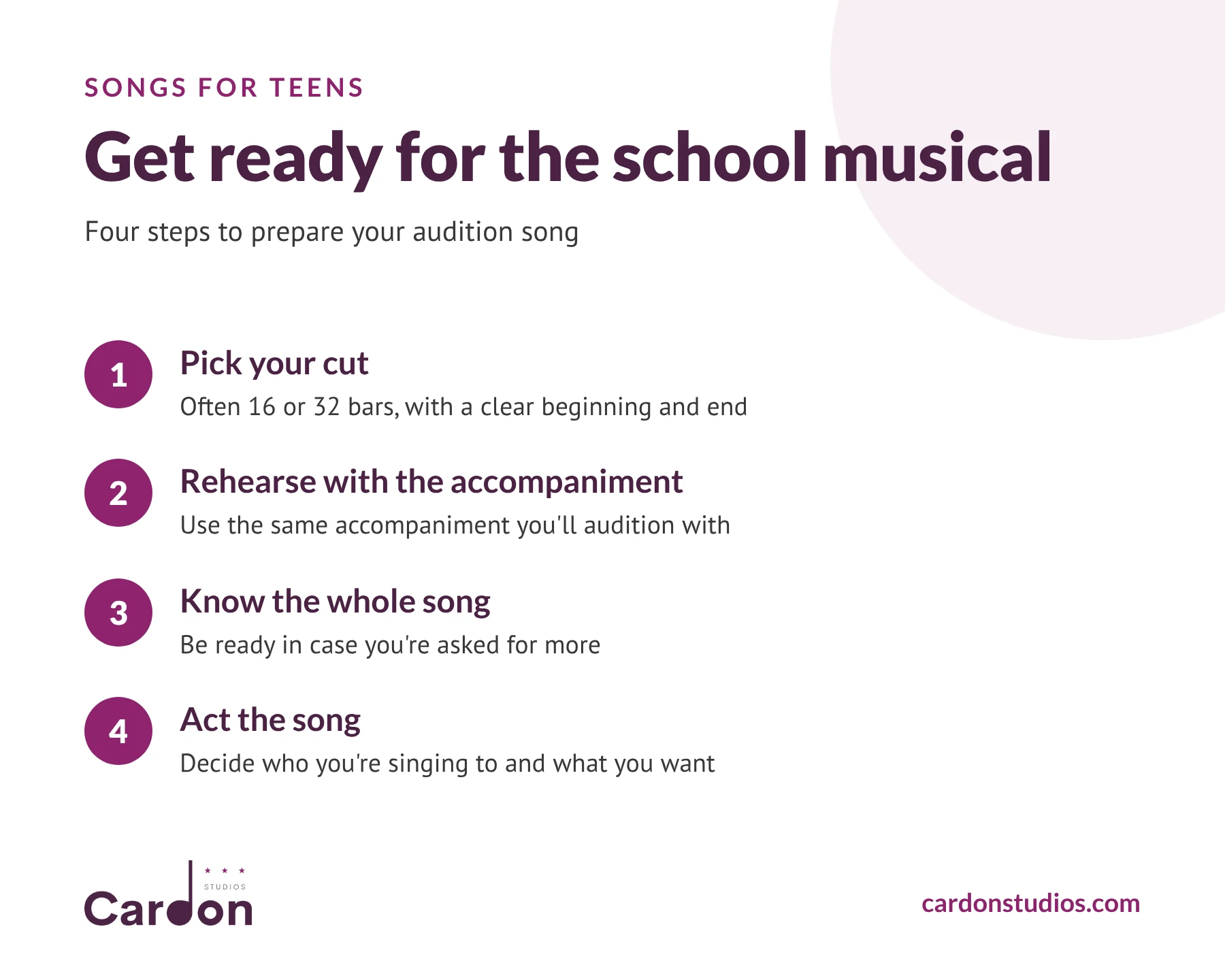
Most school and community auditions ask for a short cut, often 16 or 32 bars, sometimes in the style of the show. Choose a section with a clear beginning and end, practice it with the accompaniment you’ll use, and know the whole song in case you’re asked for more. Act the song: decide who you’re singing to and what you want.
Our step-by-step guide to community theater and school musical auditions walks you through the whole day, and our guide to conquering stage fright helps with nerves.
A note for parents
Help your teen choose songs they’re excited about and that suit their age and voice. Listen to the song and read the show’s story together, so there are no surprises about content. Celebrate the courage it takes to audition, whatever the result. Our parent’s guide to voice lessons for kids and teens has more on supporting a young singer.
From the studio
Cardon Studios teaches singers ages 10 and up. In a live online lesson, a teacher can help your teen choose songs that fit their voice and age, set a strong cut and coach the acting. Between lessons, they can send a video of their audition song and get a personalized response within two business days.
Online voice lessons
Get ready for the school musical
One monthly membership includes four private online voice lessons, one video coaching submission, the Learning Library, and member online events, with a teacher matched to your style, goals, age, and schedule.
Common questions about songs for teens
What is a good musical theatre song for a teenager?
One sung by a character close to your age, in a comfortable range, with a story you connect with. “Waiting for Life,” “I Know Things Now,” “What It Means to Be a Friend” and “Letter from the Refuge” are good places to start.
Should teens sing songs from adult roles?
Sometimes, if the song fits your voice and the content is appropriate. But songs for characters near your age usually show you best, because directors can picture you in the role.
What if my voice is changing?
Choose songs that sit comfortably now, lower the key if needed, and avoid pushing for notes that feel unstable. A teacher can help you work with your changing voice rather than against it.
How many songs should a teen have ready?
Two contrasting songs is a good start: a ballad and an up-tempo or comic song. Add more as you audition for different shows.
What makes a good comedic audition song for a teen?
Look for a character in a clear, funny situation, where the humor comes from what they want and how they react, not from vocal fireworks. Timing and acting matter most, so keep the song in a comfortable range. From the lists above, “I’m Not That Smart” is a comic character song and “I Know Things Now” is a witty one.
How do I choose a 16-bar audition cut?
Choose about 16 bars, often near the end of the song, that make sense on their own and build to a clear moment. Mark the cut clearly in your sheet music and practice starting it cold with the accompaniment. Many school auditions accept 32 bars instead, so check the audition notice.
Can I sing a Disney song for a musical audition?
Yes, if it’s from a stage musical and fits the show’s style. Very famous songs are heard often, though, so make sure you can make it your own, or choose a less familiar song from the same show.