


As a singer, caring for your voice is a full-time job. Your voice is influenced by your whole body and your environment, so good vocal habits reach well beyond the practice room. Intentional vocal care helps you sing well on short notice and keep your voice healthy for the long term, since voices change with age too. This article shares general habits that many singers find helpful; it isn’t medical advice.
Key takeaways
- Hydrate steadily, warm up and cool down, and save your speaking voice on heavy singing days.
- Avoid shouting, smoke, and vaping.
- When you’re unwell, keep singing short and light, or rest.
- See a doctor if hoarseness, pain, or voice changes don’t improve with rest.
Everyday vocal habits
Most vocal care is a handful of small habits repeated every day.
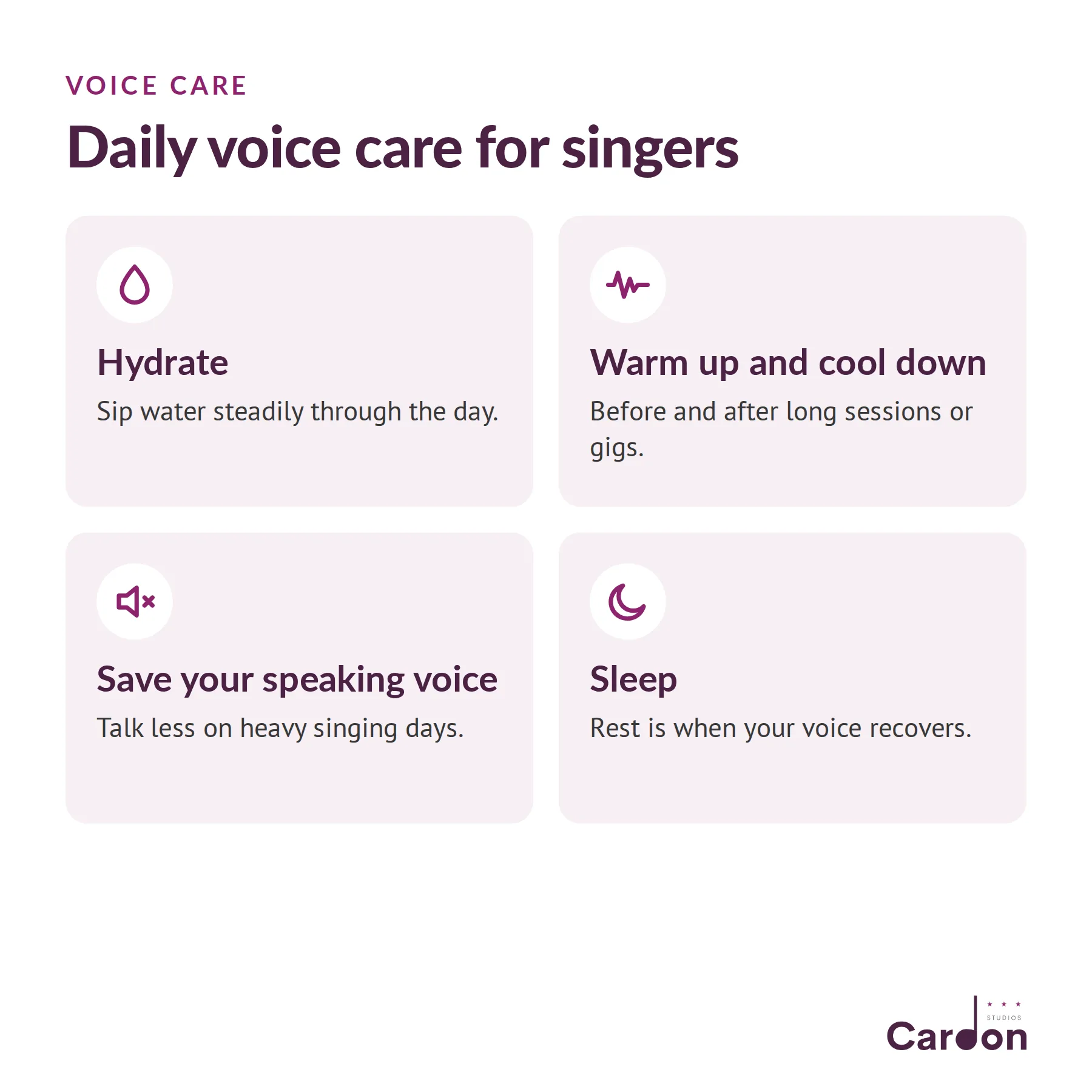
- Use your voice wisely. Avoid shouting and yelling, and reinforce good habits with a regular practice routine.
- Warm up and cool down before and after gigs or long practice sessions. Our guide to warming up explains why it matters.
- Remember that talking is vocal work too. On days with a heavy singing load, limit long conversations and loud socializing.
- Avoid smoky or heavily polluted air where you can.
- Don’t smoke or vape. Smoke of any kind is hard on your throat and your voice.
Hydration and steam
Your vocal folds come together hundreds of times per second when you sing, so it helps to keep your whole body well hydrated. Sip water steadily through the day rather than drinking a lot at once. Plain water is best, although other drinks count too.
Steam can feel soothing. Singing in a hot shower is a great habit, and some singers use a personal steamer on days their voice feels dry.
Rest and sleep
Sleep is when your voice recovers from a day’s use. If you have late-night gigs, keep your sleep routine as consistent as you can, and don’t hesitate to take a nap before a late performance. When you’re short on sleep, vocal rest helps too, and quiet routines like deep breathing, meditation, stretching, or yoga can help you recharge.
When you’re under the weather
Colds and congestion can leave your voice more fragile than it feels, even without a sore throat. If you must sing while you’re unwell, and we mean really must, keep it gentle.
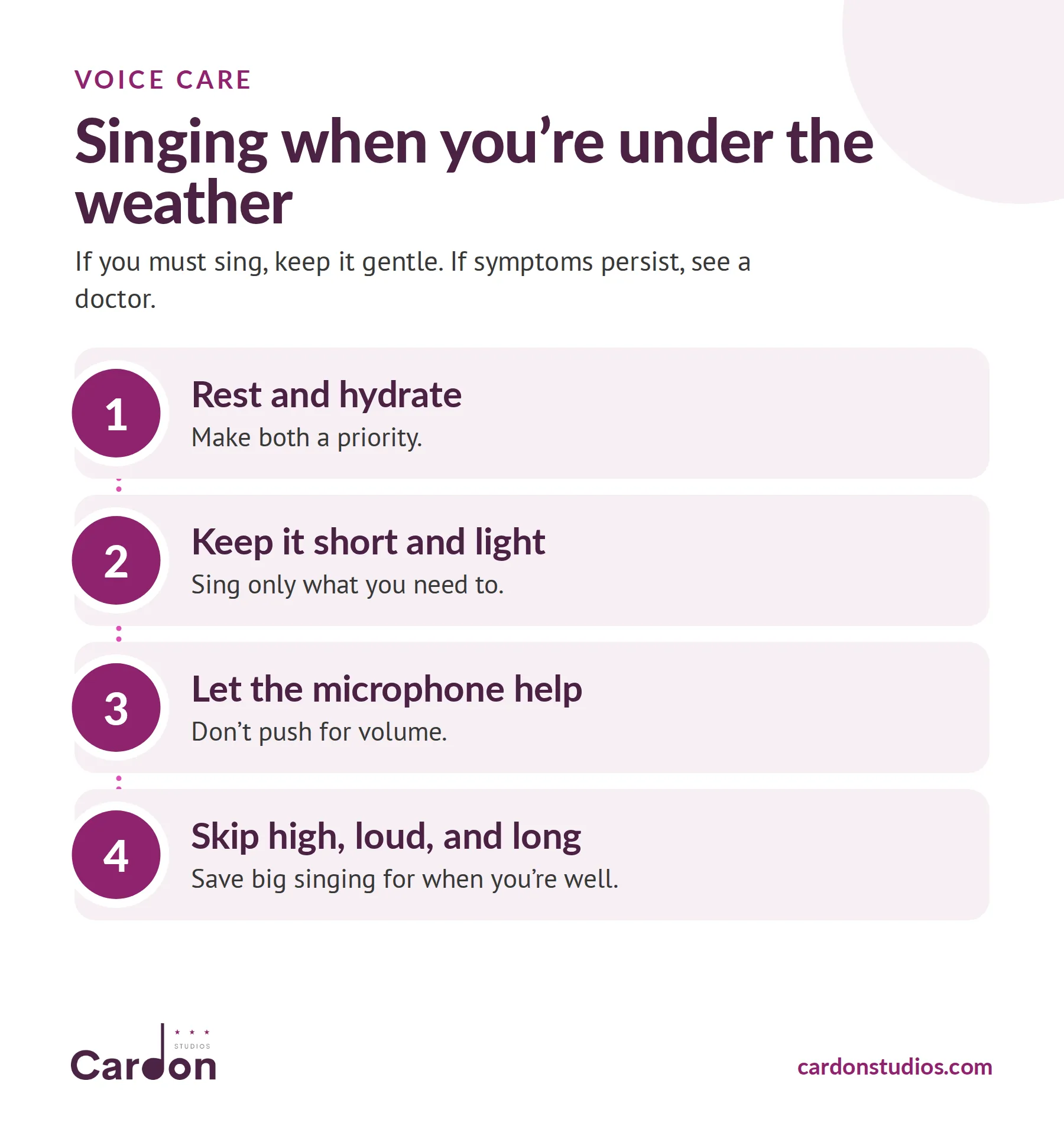
- Rest and hydrate. Make both a priority in the days around the performance.
- Keep it short and light. Sing only what you need to, and skip extra run-throughs.
- Let the microphone help. Don’t push for volume.
- Skip high, loud, and long. Save your biggest singing for when you’re well.
Menthol cough drops can feel soothing, but some singers find they leave the throat feeling drier; water and steam are gentler options. If you’re considering any medication to get through an important performance, talk to your doctor first.
Gentle exercises that help your voice work efficiently
Semi-occluded vocal tract (SOVT) exercises, such as lip trills, humming, and singing through a straw, partly close off the mouth to create gentle back pressure. Many teachers use them throughout the range to help the voice work efficiently, and they’re a gentle way to warm up on days your voice feels tired.
Food, reflux, and your voice
You may have heard that dairy or peanut butter is bad for singers. The real issue is the coating feel of thicker foods, and singers differ a lot in how much it bothers them. It’s up to you whether you avoid these foods always, only on performance days, or not at all.
Acid reflux is no friend to the voice. If you’re prone to it, notice which foods seem to set it off; coffee, alcohol, and spicy foods are common culprits for many people. If reflux seems to be affecting your voice, talk to your doctor.
Medications and supplements
Some medications can affect your voice, for example by drying you out. Ask your doctor or pharmacist about the voice-related effects of anything you take regularly, and check with them before starting any medication or supplement for your voice. If you take something drying, as many allergy medications are, drink extra water on those days.
Hormones
Hormonal changes affect the whole body, including your voice. Many singers notice changes across the menstrual cycle, during pregnancy, or around menopause. Read our guide to singing through your cycle for more on this topic.
Emotional and mental well-being
Singing is at once very personal and often very public. Whether you’re processing your own emotions or taking on the emotional weight of the songs you perform, check in on your mental wellness often. Singers are often sensitive people, and caring for yourself helps you care for your audience’s experience too.
When to see a doctor
See a doctor if hoarseness or voice changes don’t improve with rest, if singing or speaking hurts, or if you lose range or control you used to have. An ear, nose, and throat doctor (ENT), ideally a laryngologist who specializes in voice, can examine your vocal folds.
From the studio
Teachers can’t diagnose voice problems, but they can hear when a voice is working harder than it should. Cardon Studios lessons focus on healthy technique, and between lessons you can send a video for a personalized response from your teacher within 72 hours.
Online voice lessons
Build healthy habits with a teacher
One monthly membership includes four private online voice lessons, one video coaching submission, the Learning Library, and member online events, with a teacher matched to your style, goals, age, and schedule.
Common questions about vocal health
How can I keep my voice healthy as a singer?
Stay hydrated, warm up and cool down, get enough sleep, avoid shouting and smoke, and save your speaking voice on heavy singing days. Regular practice with good technique matters too.
Is dairy bad for singing?
Not for everyone. Thicker foods can leave a coating feeling that bothers some singers more than others. Notice how your voice responds and decide for yourself, especially on performance days.
Should I sing when I’m sick?
Rest if you can. If you must sing, keep it short and light, hydrate well, let the microphone help, and avoid high, loud, and long singing. If symptoms persist, see a doctor.
When should I see a doctor about my voice?
If hoarseness or voice changes don’t improve with rest, if singing or speaking hurts, or if you notice lost range or control. An ENT or laryngologist can examine your vocal folds.