


To stop procrastinating on singing practice, make starting smaller than your resistance: decide what you’ll practice before you sit down, begin with a single warm-up, and work on one short section of one song. Most singers put off practice because it feels big, vague or exposing, not because they don’t care. Shrink the task, make it specific, and give yourself a reason to look forward to it, and practice becomes much easier to begin.
Key takeaways
- Procrastination usually comes from a task that feels too big, too vague or too exposed.
- Decide tomorrow’s practice today, and start with something tiny, like one warm-up.
- Break songs into short sections, and practice somewhere you feel comfortable being heard.
- Sing music you love, and give yourself a goal or deadline to work toward.
Why singers put off practice
Everyone procrastinates, even the most seasoned musicians. Phones, a good show or a new album are always ready to fill the time you meant to spend singing. For singers, there are a few extra reasons practice gets pushed back:
- It feels too big. A whole song, a new technique or an upcoming audition can seem overwhelming, so it’s hard to know where to begin.
- It’s vague. Without a clear plan, “practice” turns into a decision you have to make every time.
- You feel exposed. Unlike most instruments, your voice is you. Being overheard by family, roommates or neighbors can make starting feel uncomfortable.
- Perfectionism. If every session has to sound good, it’s tempting not to start at all.
- You’re tired. Practice slots that fall at the end of a long day are easy to skip.
Knowing which of these applies to you makes it much easier to choose the right fix.
Seven ways to stop procrastinating on singing practice
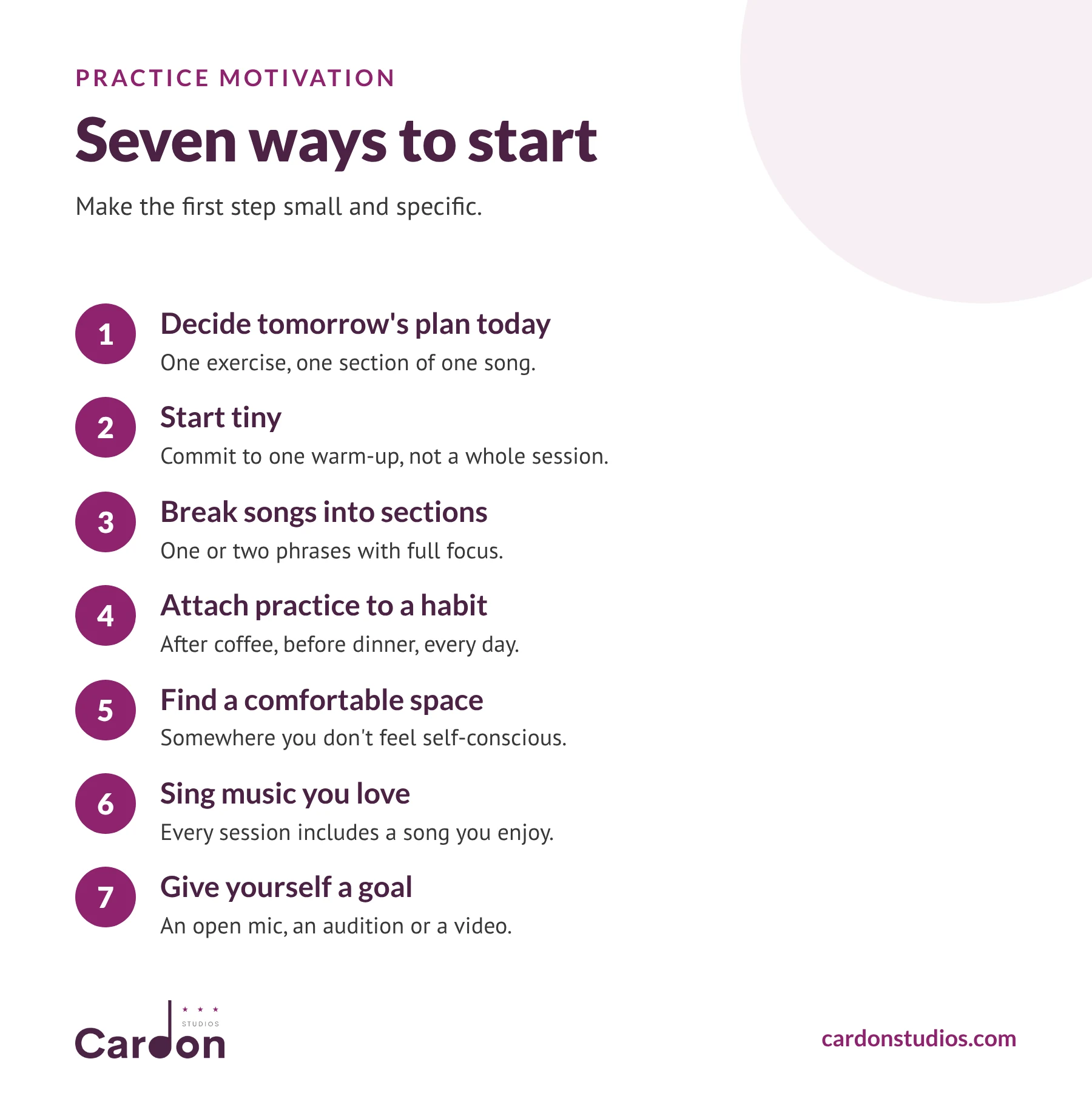
- Decide tomorrow’s plan today. Not knowing what to practice is one of the most common reasons musicians put it off. At the end of each session, write down exactly what you’ll do next time: one exercise, one section of one song.
- Start tiny. Commit to one warm-up, not a whole session. Once you’ve started, continuing is usually much easier than beginning.
- Break songs into sections. A long song or a new technique is easier to tackle in small pieces. Work on one or two phrases with full focus, and let that be enough for the day.
- Attach practice to a habit. Link practice to something you already do every day, such as after your morning coffee or before dinner, so it doesn’t depend on willpower.
- Find a comfortable space. Choose a spot and a time where you don’t feel self-conscious. Our guide to practicing singing in an apartment has ideas for quieter practice.
- Sing music you love. Enjoyment is one of the best motivators. Make sure every session includes a song that makes you happy, alongside the work your teacher gave you.
- Give yourself a goal. A deadline makes practice feel purposeful: an open mic, a performance, an audition or a video you plan to send your teacher. Our guide to Plan to Succeed helps you set goals that work.
Stop overthinking and start
Sometimes the obstacles begin and end inside your head. The more you think about how much there is to do, the bigger and more complicated it seems. The best way to break that loop is to take a single step. When you feel frozen by the work ahead, tell yourself to stop thinking, stand up and sing one warm-up. That’s all you have to do to begin.
It also helps to make your practice space inviting. Good light, a glass of water, your music ready on the stand and a comfortable place to stand all lower the effort it takes to start. When the setup is already done, starting takes seconds.
And remember that progress doesn’t require a perfect session. A short, imperfect practice still counts, and it keeps the habit alive. If your list of goals feels overwhelming, read Avoiding Overwhelm.
A starter session for low-energy days
Some days you won’t feel like practicing at all. Instead of skipping, use a short starter session. It keeps the habit going and often turns into more practice than you planned.
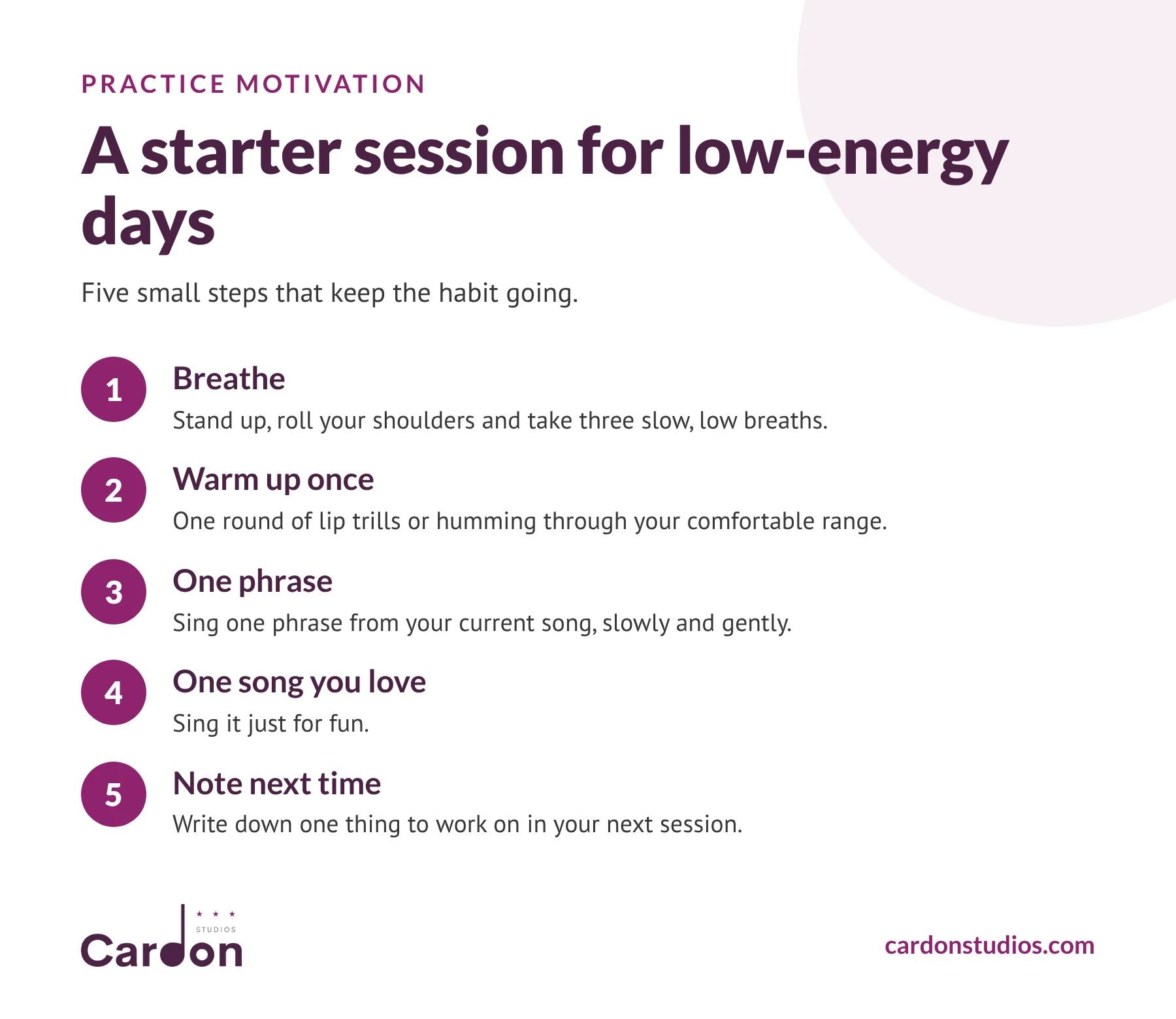
- Stand up, roll your shoulders and take three slow, low breaths.
- Do one round of lip trills or humming through your comfortable range.
- Sing one phrase from your current song, slowly and gently.
- Sing one song you love, just for fun.
- Write down one thing to work on next time.
If you finish and want to keep going, great. If not, you’ve still practiced, and tomorrow’s session will be easier to start. For a full routine, try our complete vocal warm-up.
Reframe the thoughts that stop you
| If you’re thinking… | Try this instead |
|---|---|
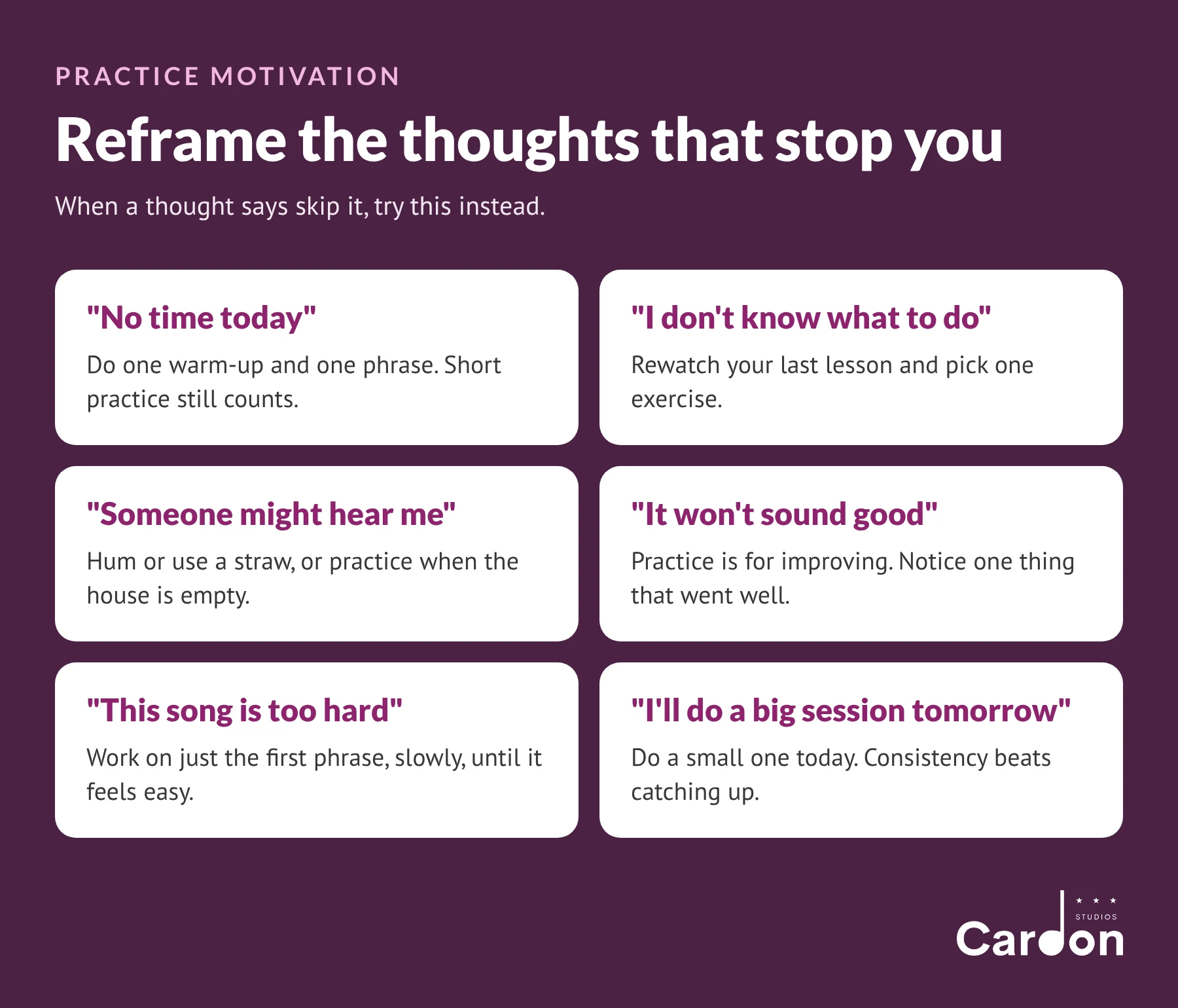
| “I don’t have time for a proper session.” | Do one warm-up and one phrase. Short practice still counts. |
| “I don’t know what to work on.” | Rewatch your last lesson and pick one exercise from it. |
| “Someone might hear me.” | Choose quieter exercises such as humming or straw singing, or practice when the house is empty. |
| “It won’t sound good today.” | Practice is for improving, not performing. Record it and notice one thing that went well. |
| “This song is too hard.” | Work on just the first phrase, slowly, until it feels easy. |
| “I’ll do a big session tomorrow.” | Do a small one today. Consistency beats catching up. |
Use a music practice tracker to keep the habit
A music practice tracker turns practice into something you can see, and that alone makes starting easier. You don’t need an app. A notebook or a note on your phone works, as long as you fill it in at the end of every session, even a short one.
Keep the columns simple, so filling them in never becomes another reason to put practice off:
| Column | What to write | Example |
|---|---|---|
| Date | The day you practiced | Tuesday |
| What I did | Your warm-up, exercise and song section | Lip trills, five-note hum, first verse |
| One win | Something that went better than last time | Held the long note without running out of air |
| Next time | The first thing to do next session | Second verse, slowly |
| How my voice felt | One word | Easy |
The “Next time” column does the most work. It’s the “decide tomorrow’s plan today” step in written form, so when you sit down you already know where to begin. The “One win” column matters too: procrastination feeds on the feeling that practice isn’t working, and a growing list of small wins is evidence that it is.
Once a week, read back over your tracker and look for gaps: which days you skip, and what was happening on those days. If you always miss practice after a late shift, move that session to the morning or make it a starter session. If the same song section shows up week after week without a win, bring it to your teacher. Pair the tracker with a short recording every week or two (our guide to recording yourself singing explains how), and you’ll have both a written and an audio record of your progress. For the bigger picture of how steady routines build skill, see what singers can learn from famous musicians’ routines.
When putting it off is a signal
Taking a break now and then can actually help, especially when you’re stuck in a rut. Coming back to a song with a fresh mind and a new outlook can do wonders for your progress. Procrastination only becomes a problem when it turns into a habit.
Sometimes, though, avoiding practice is telling you something. If your voice often feels tired or sore, rest it and talk to your teacher. If you’ve lost interest in your songs, it may be time for new repertoire. And if you feel stuck because an exercise doesn’t seem to work, ask for help rather than avoiding it. For a simple structure that keeps practice focused, read how to practice singing between voice lessons.
From the studio
Accountability makes a big difference. Regular live online lessons give your practice a rhythm and a reason, and your teacher can help you set a plan you’ll actually follow. Lessons are recorded so you can rewatch what to work on, and between lessons you can send a video and get a personalized response within 72 hours.
Online voice lessons
Give your practice a rhythm and a reason
One monthly membership includes four private online voice lessons, one video coaching submission, the Learning Library, and member online events, with a teacher matched to your style, goals, age, and schedule.
Common questions about practice motivation
How do I make myself practice singing?
Make starting easy: decide what you’ll practice ahead of time, attach practice to a daily habit, and commit to just one warm-up. Once you’ve started, it’s usually easy to keep going.
Why don’t I feel like practicing?
Common reasons are a task that feels too big or vague, feeling self-conscious about being heard, perfectionism or tiredness. Identify which applies to you, then shrink the task or change the setting.
Is it OK to take a break from singing practice?
Yes. An occasional break can refresh your perspective, and resting a tired voice is wise. Just plan when you’ll return so the break doesn’t become a habit.
How do I stay consistent with singing practice?
Practice at the same time and place each day, keep sessions small, and track them on a calendar so you can see your streak. Regular lessons and a goal to work toward also help keep you on track.
Is it procrastination or musician burnout?
Procrastination is putting off something you still want to do; burnout feels more like being worn out by music itself. If you’ve felt drained or flat about singing for weeks, even with songs you love, ease off: shorter sessions, lighter goals or new repertoire, and tell your teacher how you’re feeling. If low mood or exhaustion carries over into the rest of your life, talk to a doctor or a mental health professional.
How can I make singing practice more fun?
Include a song you love in every session, set a goal such as an open mic or a video for your teacher, and record yourself so you can hear your progress over time.